
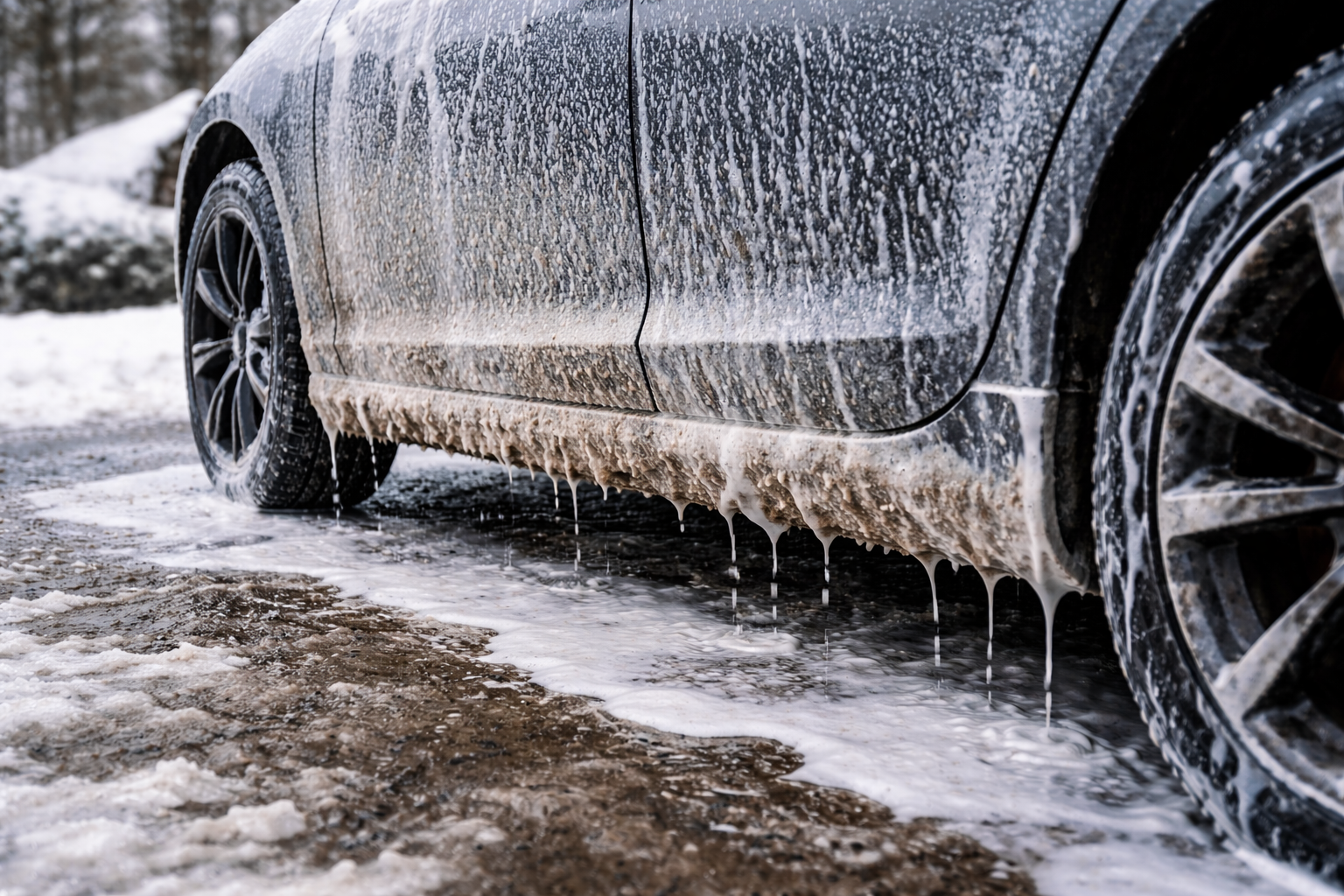
Road salt is one of the most persistent forms of winter contamination your car faces. Even when the roads look dry, salt residue can remain on the paint, wheels, wheel arches and lower bodywork.
Left there for too long, salt combines with moisture and road grime, creating conditions that promote corrosion and leave the exterior looking dull and dirty. A proper winter or early-spring wash is therefore about much more than appearance — it is an important part of protecting the vehicle.
The safest way to remove road salt from a car is to rinse away loose contamination first, use a proper pre-wash to loosen winter road film, follow with a lubricated contact wash, thoroughly rinse lower panels, wheels and wheel arches, then dry the vehicle and restore protection. Avoid rubbing dry salt directly with a wash mitt or microfiber towel.
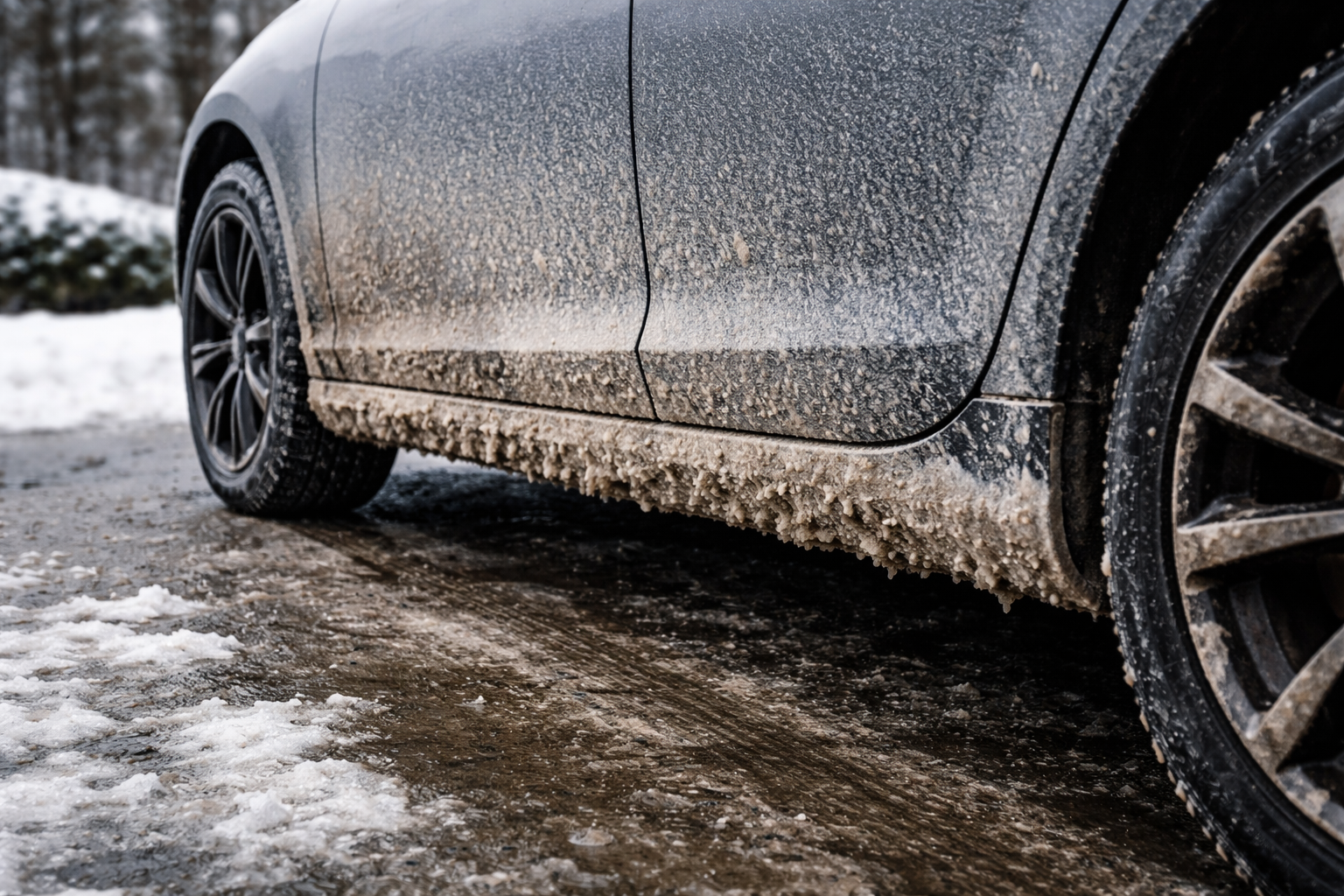
Why Does Road Salt Damage Cars?
Road salt does not simply make the exterior look dirty. Salt residue, moisture and winter road film create an environment that can accelerate corrosion, especially around exposed metal parts and areas that remain wet for long periods.
Salt contamination can remain on surfaces together with moisture and winter grime.
Chloride contamination and moisture can accelerate corrosion on vulnerable metal components.
Salt mixes with oily traffic film and dirt, making lower areas increasingly difficult to clean.
Heavy winter contamination can reduce the performance and appearance of existing protection.
Remove Winter Road Film Before Contact Washing
Salt rarely appears on the car by itself. It becomes mixed with oily traffic film, dirt and grime, especially around the sills, bumpers and lower doors.
A strong pre-wash such as Good Stuff Traffic Film Remover helps loosen this contamination before the wash mitt touches the paint.
- Work on a cool surface outside direct sunlight.
- Dilute TFR according to the level of contamination.
- Apply it to the areas that need stronger pre-cleaning.
- Allow a controlled dwell time without letting the product dry.
- Rinse thoroughly with high-pressure water.
TFR is a pre-wash, not a replacement for shampoo. Its job is to reduce the amount of heavy road contamination remaining before the contact wash.
View Traffic Film Remover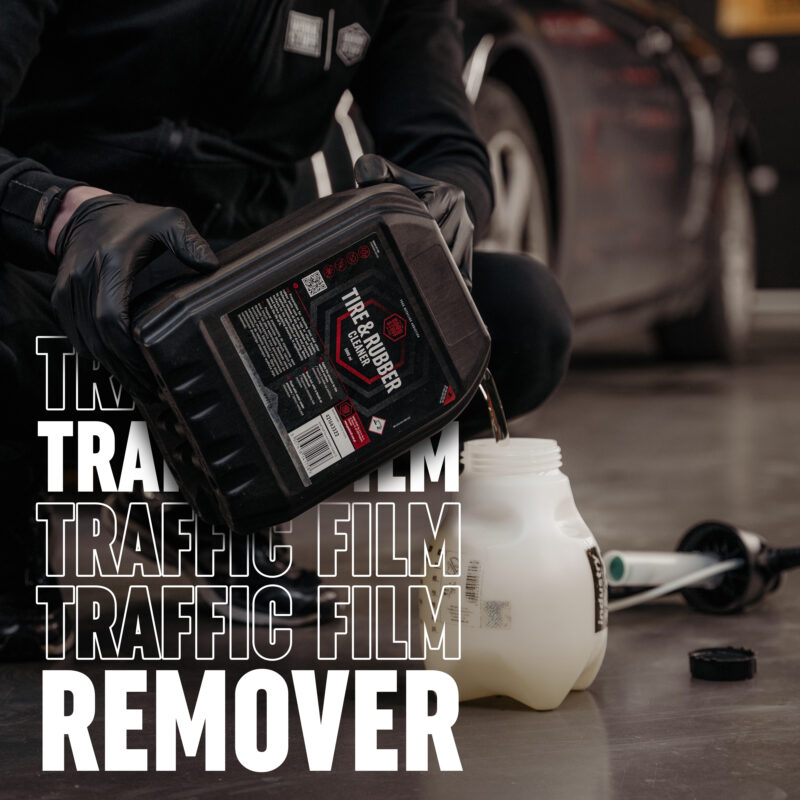
Choose the Right Car Shampoo
After rinsing away the pre-wash, the next step is a lubricated contact wash. The shampoo should match the condition of the surface rather than simply whether the car is coated or uncoated.
Pure Shampoo
Pure Shampoo is the everyday choice for safe contact washing. Its pH-neutral formula and high lubrication make it suitable for protected and unprotected paint, including ceramic coatings, sealants and waxes.
Use it when the vehicle mainly needs a thorough but balanced maintenance wash after the pre-wash stage.
View Pure ShampooSour Shampoo
Sour Shampoo is designed for deeper acidic contact washing when mineral buildup, light road film or accumulated residue requires more than a routine neutral shampoo.
It is particularly useful during periodic reset washes and surface-preparation routines.
View Sour ShampooWash From the Cleanest Areas to the Dirtiest
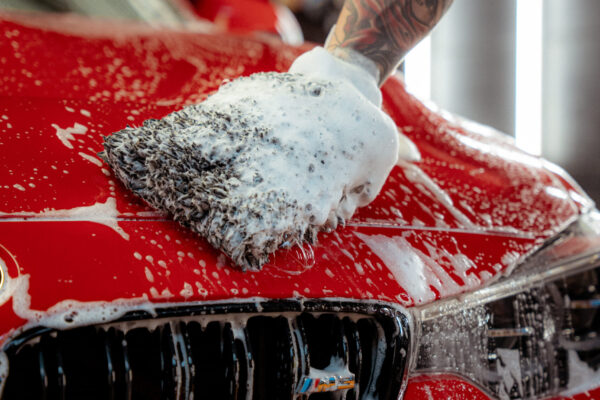
After pre-washing, use a clean microfiber wash mitt and work methodically from the upper panels toward the dirtier lower areas. Rinse the mitt frequently so that loosened grit is not repeatedly dragged across the paint.
- Work from top to bottom.
- Use plenty of shampoo solution and lubrication.
- Rinse your wash mitt frequently.
- Keep wheel tools separate from paint-safe wash media.
- Pay extra attention to rocker panels, lower doors, bumpers and wheel arches.
Don't Forget the Undercarriage, Wheel Arches and Lower Panels
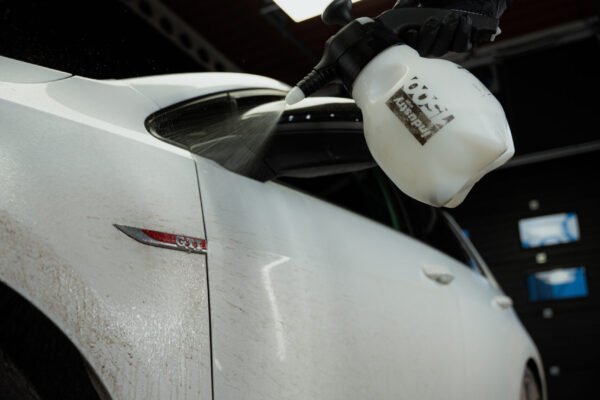
Road spray concentrates salt and winter contamination in the areas closest to the road. Even when the upper body already looks clean, contamination may still remain underneath the vehicle and around the wheels.
Use plenty of clean water to flush accessible lower areas thoroughly. The goal is to remove as much remaining salt and road contamination as possible rather than simply cleaning the visible paint.
Pay particular attention to:
- Wheel arches and wheel barrels
- Rocker panels and lower doors
- Lower bumpers and road-facing surfaces
- Accessible suspension-adjacent areas
- Visible underbody edges and exposed metal components
For a complete wheel-cleaning process, see our wheel and rim cleaning guide.
Can You Neutralize Road Salt on a Car?
People often search for a product that will “neutralize” road salt, but in practical car washing the most important step is to dissolve and physically remove the salt contamination from the vehicle.
Road salts are water-soluble, so thorough rinsing is essential. However, winter salt is usually mixed with greasy road film and other contamination. That is why rinsing works best as part of a complete process: high-pressure rinse, appropriate pre-wash, lubricated contact wash and another thorough rinse.
Avoid experimenting with aggressive household mixtures on automotive paint. Dedicated car-care chemistry gives you much better control over cleaning power and surface compatibility.
Restore Protection After the Winter Wash
Once the vehicle has been properly washed and dried, it is a good time to refresh the exterior protection.
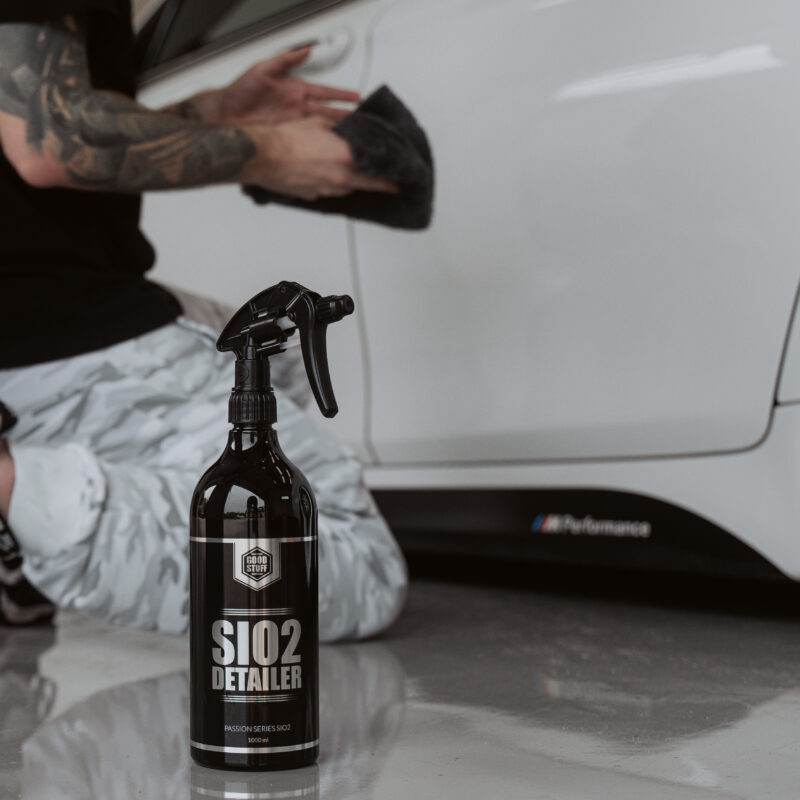
Good Stuff SiO₂ Detailer can be used as a final spray-and-wipe step on clean, dry paint. It improves gloss and slickness while adding hydrophobic protection that can last for up to four weeks.
- Enhances gloss and surface slickness.
- Improves water repellency.
- Suitable for coated and uncoated paint.
- Helps refresh protection between more extensive detailing sessions.
How Often Should You Wash Road Salt Off Your Car?
There is no single schedule that fits every winter. How often the car needs washing depends on road conditions, temperature, mileage, where the vehicle is stored and how heavily local roads are treated.
Do not allow heavy winter contamination to build up for long periods.
A thorough rinse and wash is especially useful after repeated driving on heavily treated roads.
Carry out a more complete wash and inspection when winter road treatment begins to end.
The important part is consistency. Removing winter contamination regularly is much easier than dealing with months of accumulated road film and salt residue at the end of the season.
The Right Accessories Make Winter Washing Safer
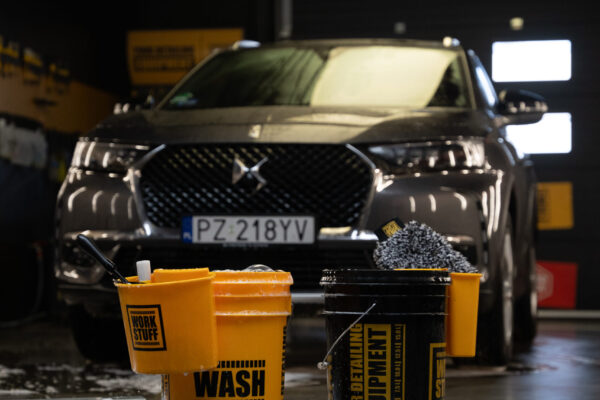
Good chemistry is only one part of the process. Clean wash media and proper bucket management help prevent the contamination removed during washing from being transferred back onto the paint.
Use a dedicated microfiber wash mitt, a separate rinse bucket and a bucket separator where possible. Wheel tools should also remain separate from the equipment used on painted body panels.
This becomes especially important during winter because road grit, salt and heavy grime can quickly contaminate wash media.
Road Salt on Cars — Frequently Asked Questions
Does road salt damage car paint?
Road salt contamination contributes to conditions that can promote corrosion, particularly when moisture remains present. Painted surfaces are protected by the clear coat, but chips, scratches, exposed metal and lower vehicle areas can be more vulnerable. Regular winter washing helps prevent contamination from accumulating.
How long can road salt stay on your car before causing damage?
There is no exact number of days because corrosion depends on moisture, temperature, surface condition, salt concentration and exposure. The safest approach is not to leave heavy salt contamination on the vehicle for extended periods, especially after repeated driving on treated winter roads.
How often should you wash salt off your car in winter?
Wash frequency should depend on conditions. Cars driven frequently on heavily salted roads need more attention than vehicles exposed only occasionally. Rather than following a rigid schedule, wash the car whenever visible winter contamination begins to accumulate and carry out a thorough clean after periods of severe winter weather.
What dissolves road salt on a car?
Road salts are water-soluble, which makes thorough rinsing an essential part of removal. Because the salt is usually mixed with oily road film and dirt, a proper automotive pre-wash and shampoo help remove the surrounding contamination so that the surface can be rinsed clean more effectively.
Can you neutralize road salt on a car?
For normal car care, focus on removing the salt rather than trying to chemically “neutralize” it with household mixtures. Rinse thoroughly, loosen road film with suitable pre-wash chemistry, contact wash with automotive shampoo and rinse again.
Does ceramic coating protect a car from road salt?
A ceramic coating provides an additional protective layer and can make regular cleaning easier, but it does not make the vehicle immune to winter contamination or corrosion. Salt and road film should still be removed regularly, especially from wheels, lower bodywork and exposed areas.
Final Thoughts: Remove What Winter Leaves Behind
Road salt is easier to manage when it is treated as part of a complete winter washing routine rather than as a single stain-removal problem.
Start by rinsing away loose contamination, use a dedicated pre-wash when heavy road film is present, perform a lubricated contact wash and pay close attention to wheels, wheel arches, lower panels and accessible underbody areas. Once the vehicle is clean and dry, refresh the protection where needed.
Handled regularly, this process keeps winter contamination under control and prepares the car for cleaner, easier maintenance when spring arrives.
Products Used in This Guide
Build the process around the condition of the vehicle rather than using one product for every stage.


