Stains Happen. Bad Cleaning Makes It Worse.
Fabric car seats get dirty from normal daily use: coffee, mud, kids' snacks, pet hair, sweat, gym bags or shopping bags. The problem often starts when we try to clean one small stain too quickly, use too much product or scrub too hard.
That is why stains sometimes come back, water marks appear, or the fabric looks darker after drying. Here's how to clean fabric car seats, carpets and interior textiles safely — without a wet vac or extractor for normal maintenance, without soaking the material, and without making the stain worse.
Can You Clean Fabric Car Seats Without a Wet Vac?
Yes — for regular maintenance, fresh marks and light-to-moderate dirt, you can clean fabric car seats without a wet vacuum, extractor or upholstery machine. Vacuum the seat thoroughly, apply a controlled amount of dedicated upholstery cleaner, agitate gently, remove loosened dirt and cleaner with a clean slightly damp microfiber, then blot excess moisture with a dry towel and let the seat dry completely.
The goal is low-moisture cleaning: use enough product to loosen contamination, but not enough to soak the foam beneath the fabric.
What Causes Problems?
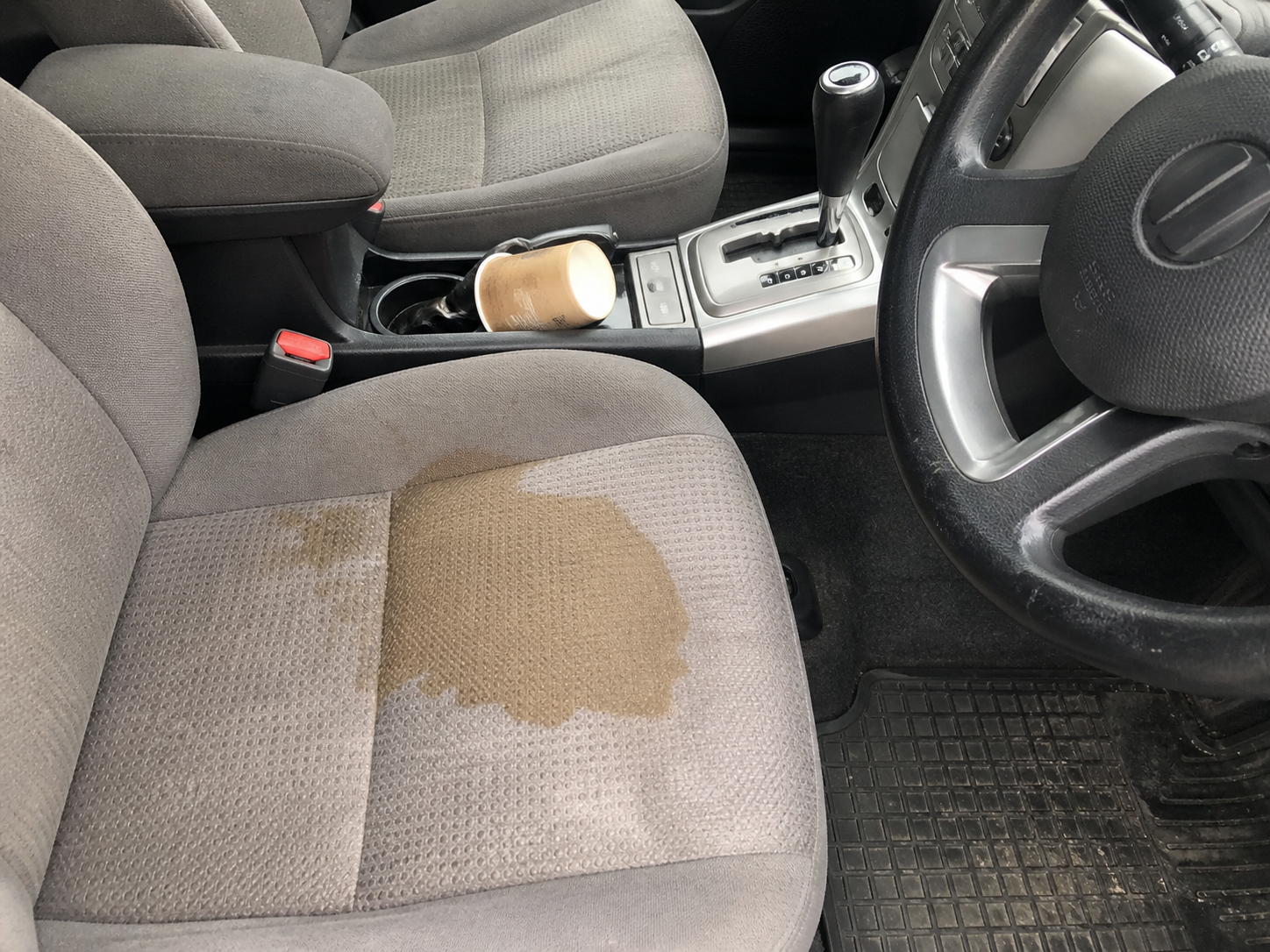
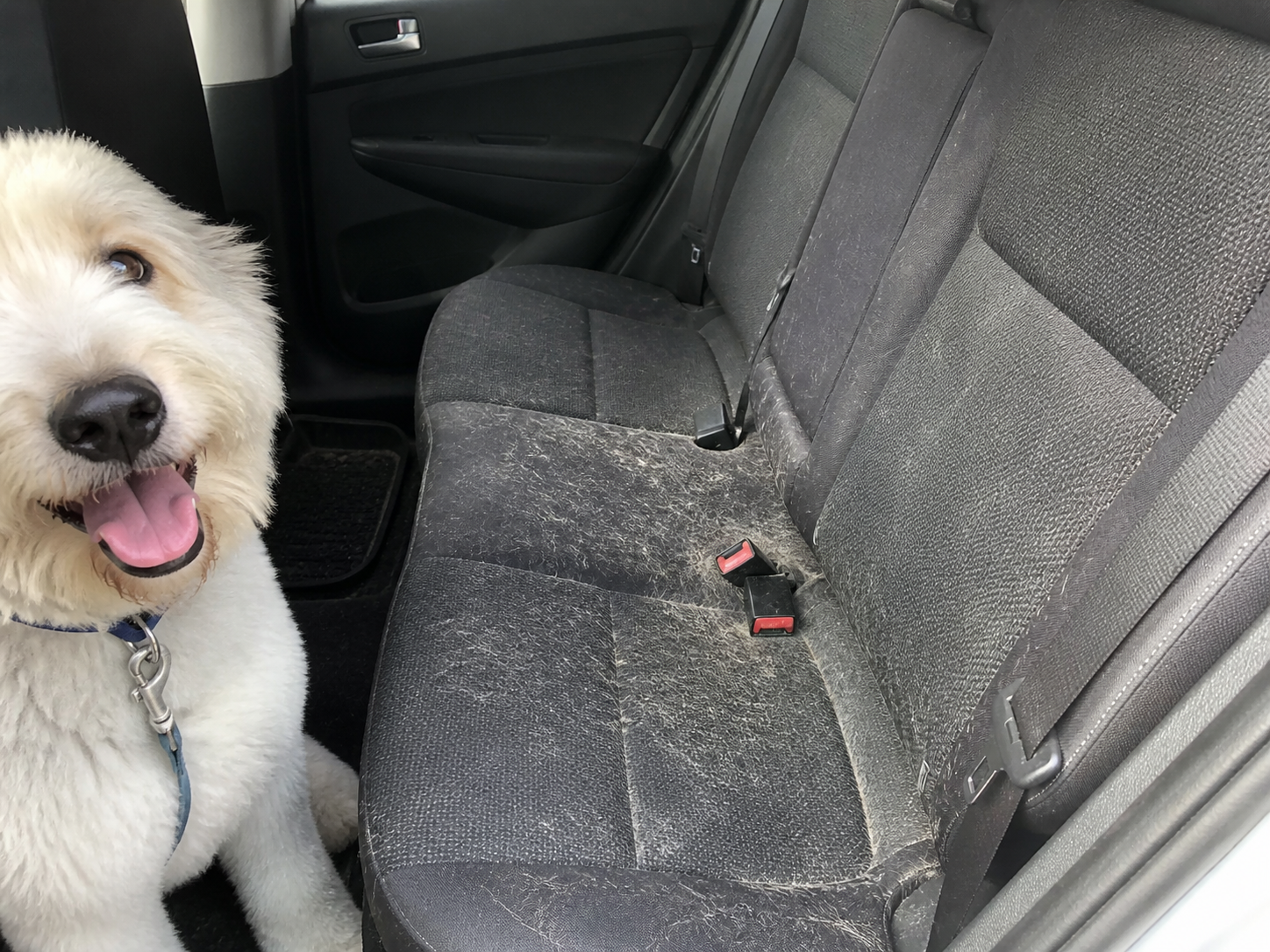
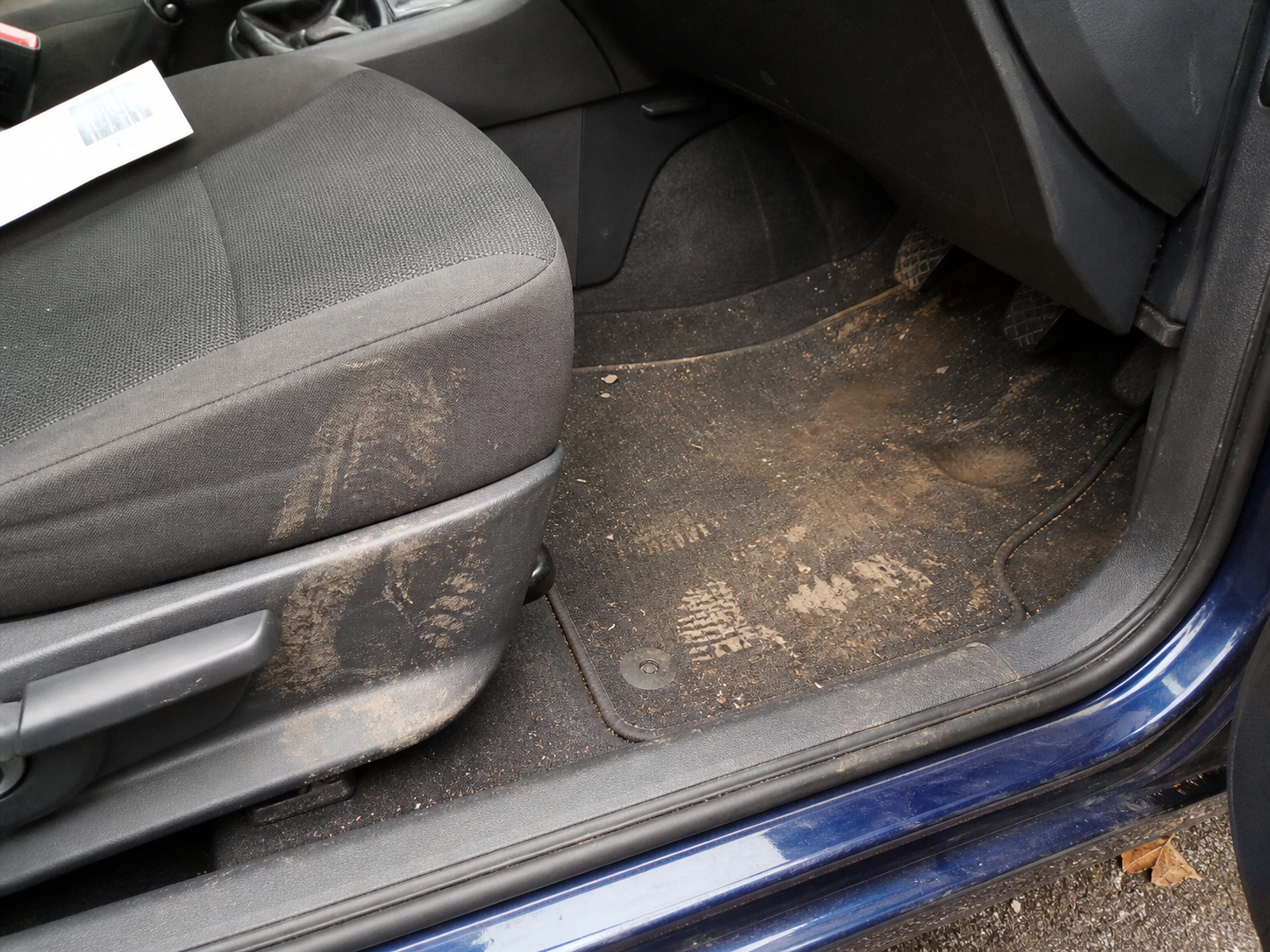
The most annoying interior problems usually come from everyday life, not extreme dirt. A quick coffee on the way to work, muddy shoes after rain, kids eating in the back seat, pet hair, sweat after the gym or simple daily use can make fabric seats look tired, stained and grey. And when you try to clean them too quickly, you can easily leave water marks or make the stain spread.
Why Do Water Marks Appear After Cleaning Car Seats?
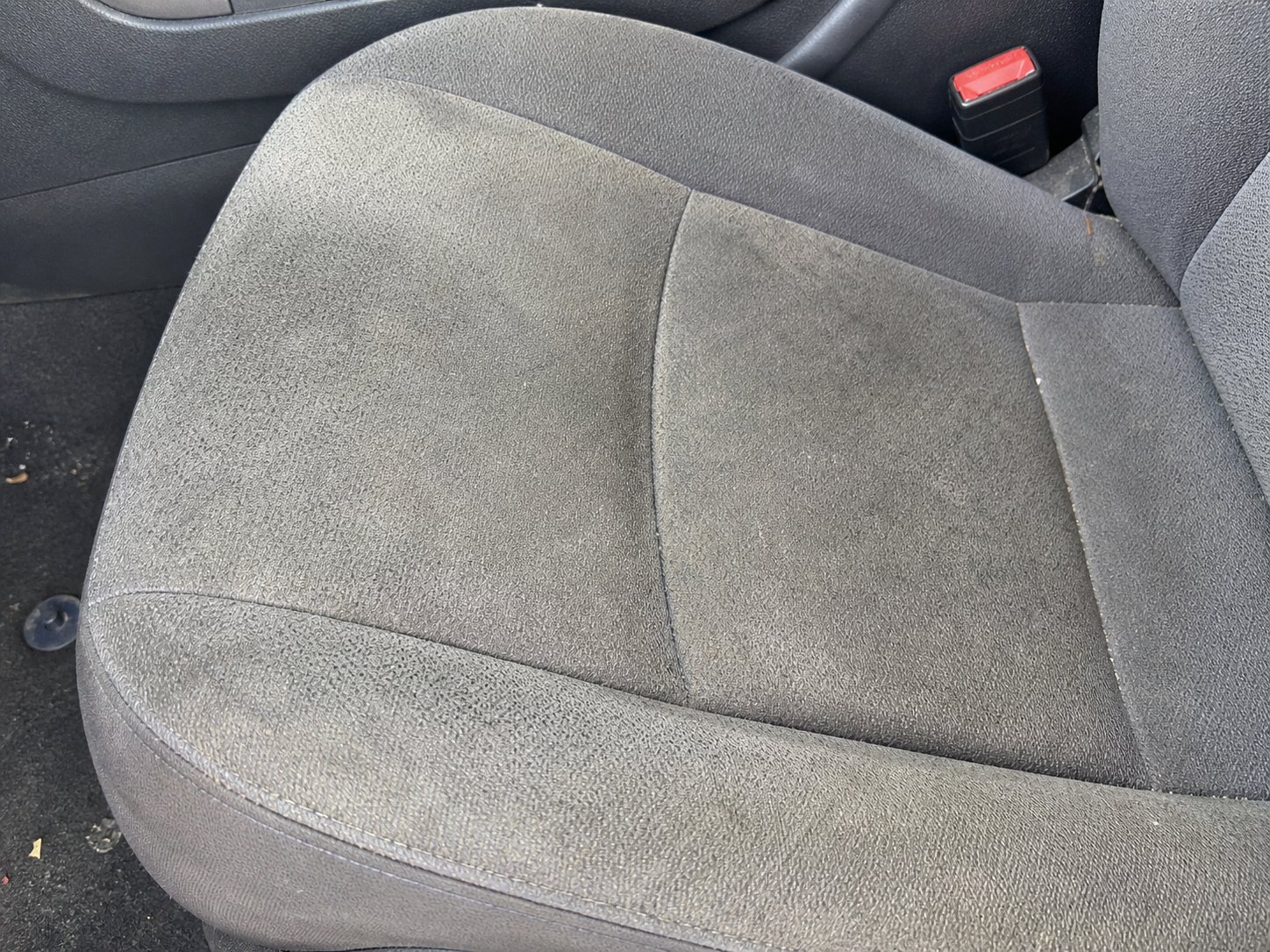
A visible ring can appear when one small area becomes much wetter than the surrounding fabric. As moisture moves through the fibers and evaporates, dissolved dirt or cleaner residue can migrate toward the edge of the wet area. Detailers often describe this as wicking or a tide line.
The practical fix is not to keep soaking the spot. Use less liquid, remove residue with microfiber, and clean the complete fabric panel from seam to seam so the material dries more evenly.
How to Clean Fabric Car Seats Without Making the Stain Worse
The key is simple: don't rush and don't soak the fabric. You do not need a wet vac or extractor for every maintenance clean. Most water marks and stains come from using too much product, scrubbing one small spot too hard, leaving residue behind, or closing the car before the seat is fully dry.
-
01
Vacuum first
Remove crumbs, sand, pet hair and dry dirt before using any cleaner. If you spray cleaner onto dry mess, it can turn into muddy residue inside the fabric.
-
02
Blot spills before cleaning
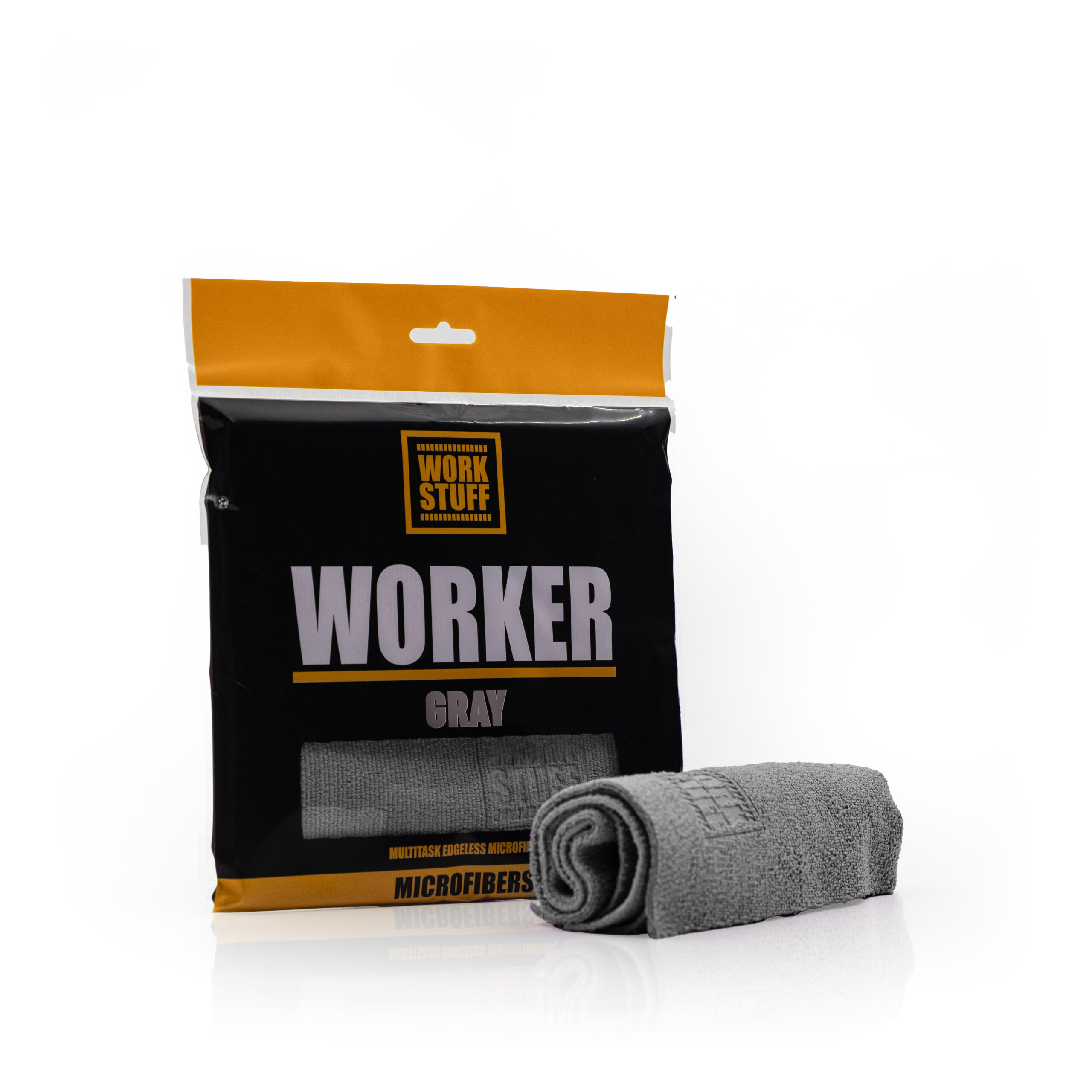
If it's coffee, juice or soda, press a clean Work Stuff microfiber towel into the stain first. Don't rub — rubbing can push liquid deeper into the seat.
-
03
Apply cleaner lightly
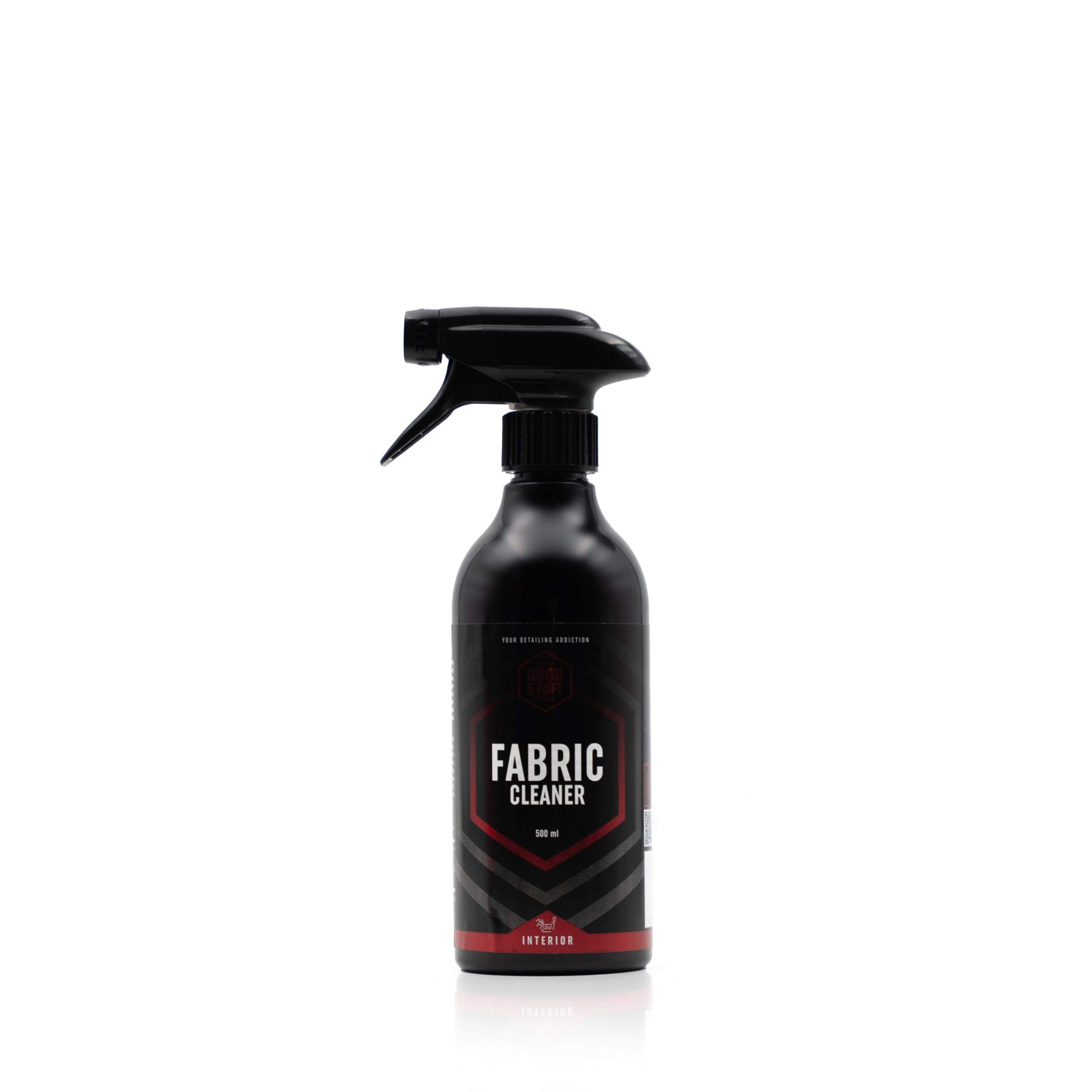
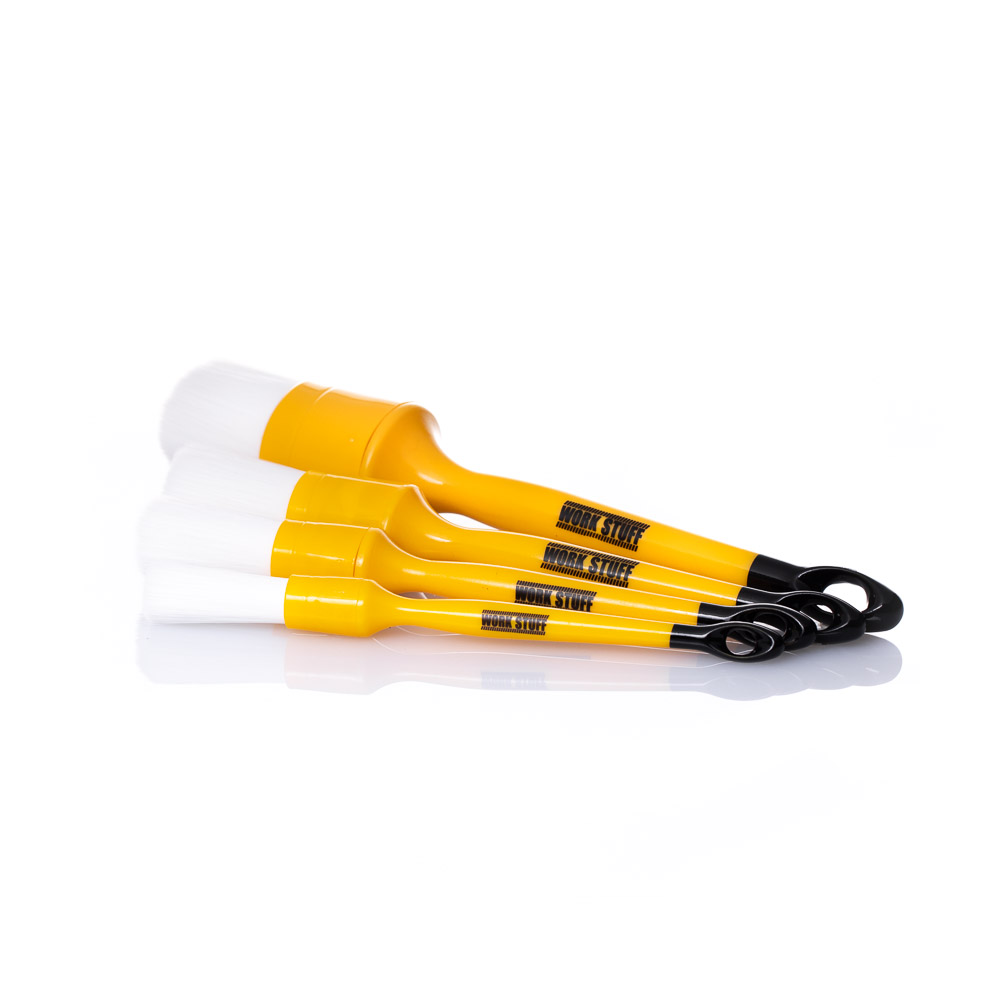
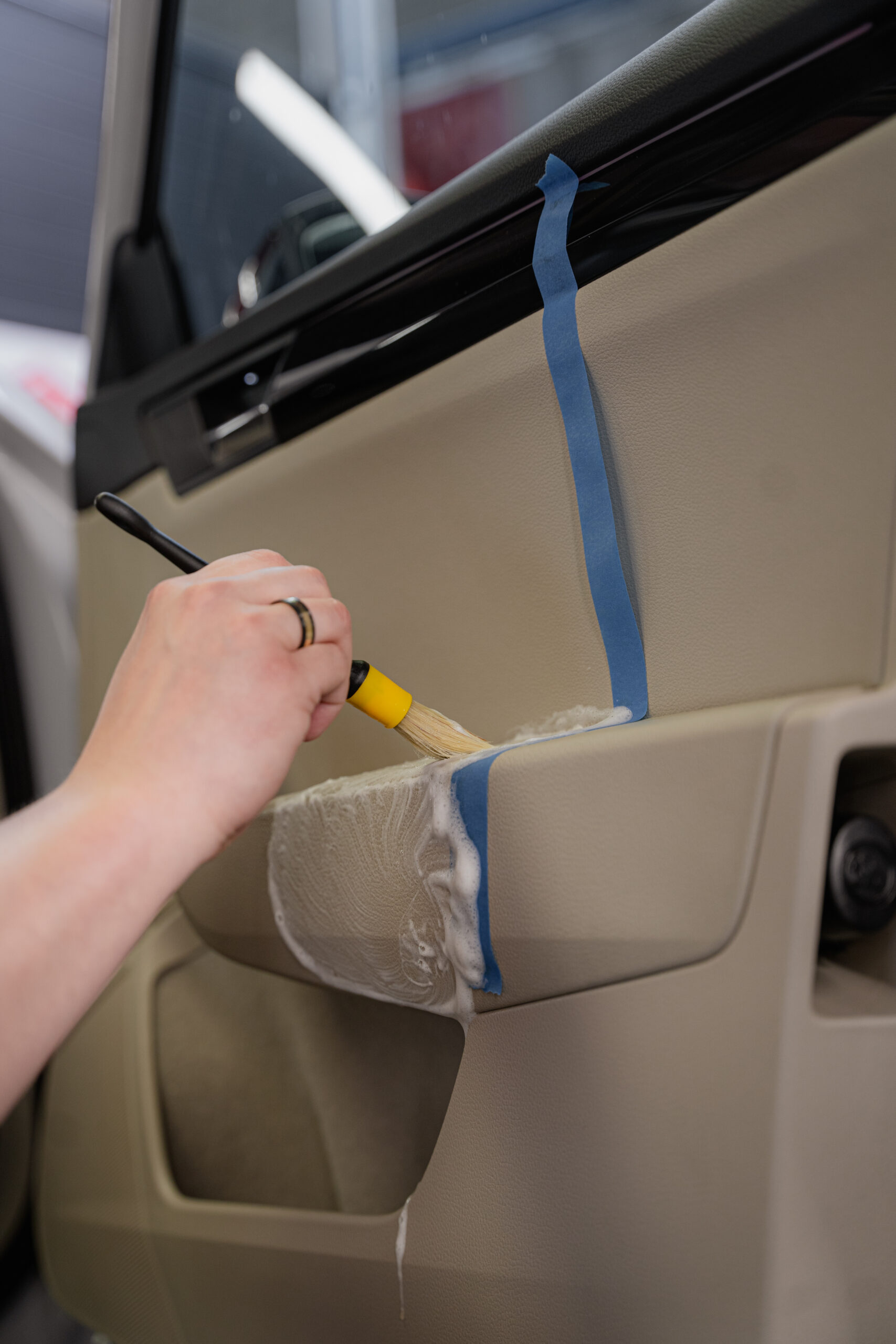
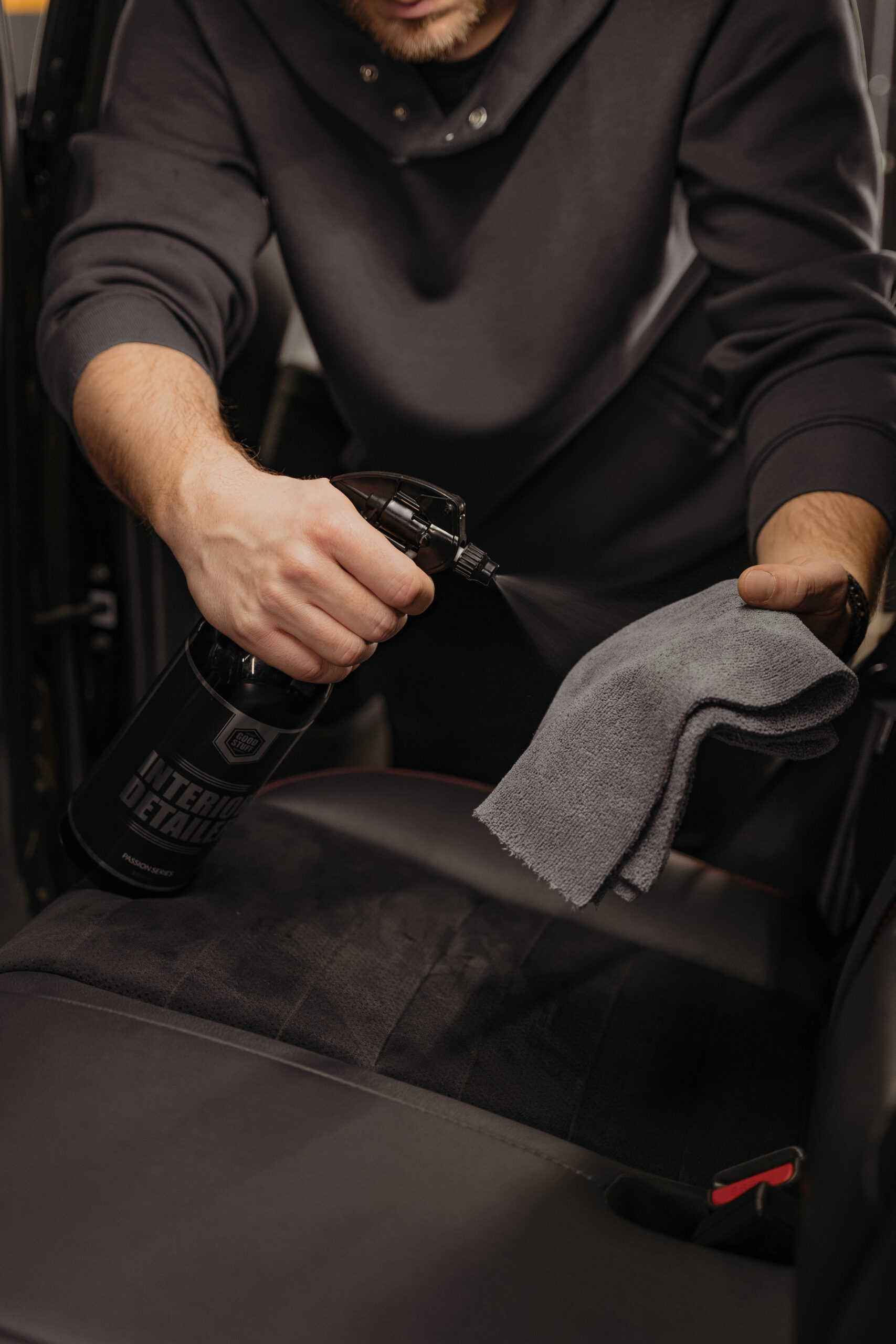
Apply a small amount of Good Stuff Fabric Cleaner to the fabric or, for better moisture control, to a clean microfiber or soft detailing brush. The formula is ready to use, so no dilution is required. Don't soak the seat.
-
04
Brush gently
Work in small sections and use light pressure. The goal is to loosen dirt from the fibers, not scrub the fabric aggressively.
-
05
Remove dirt and cleaner with microfiber
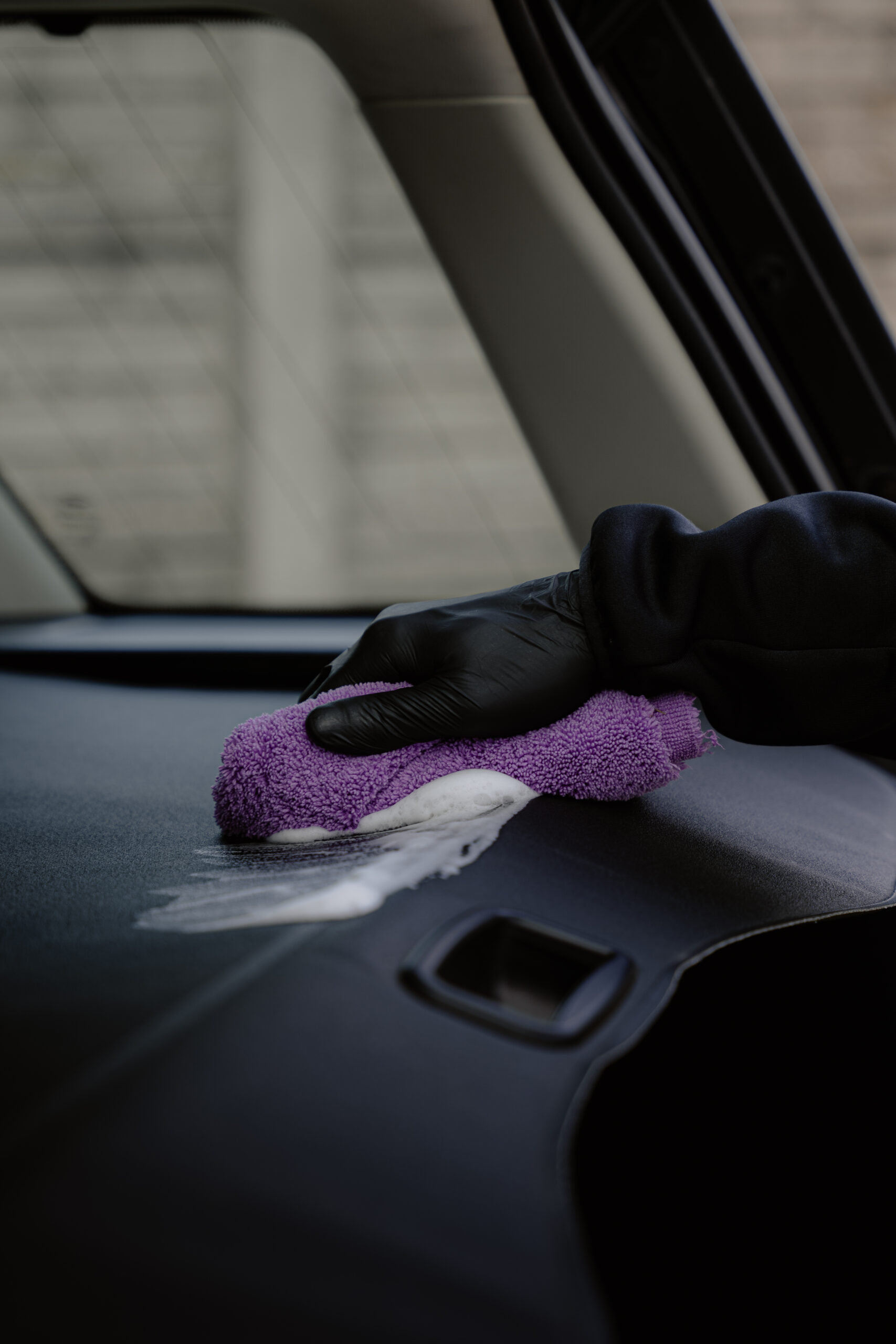
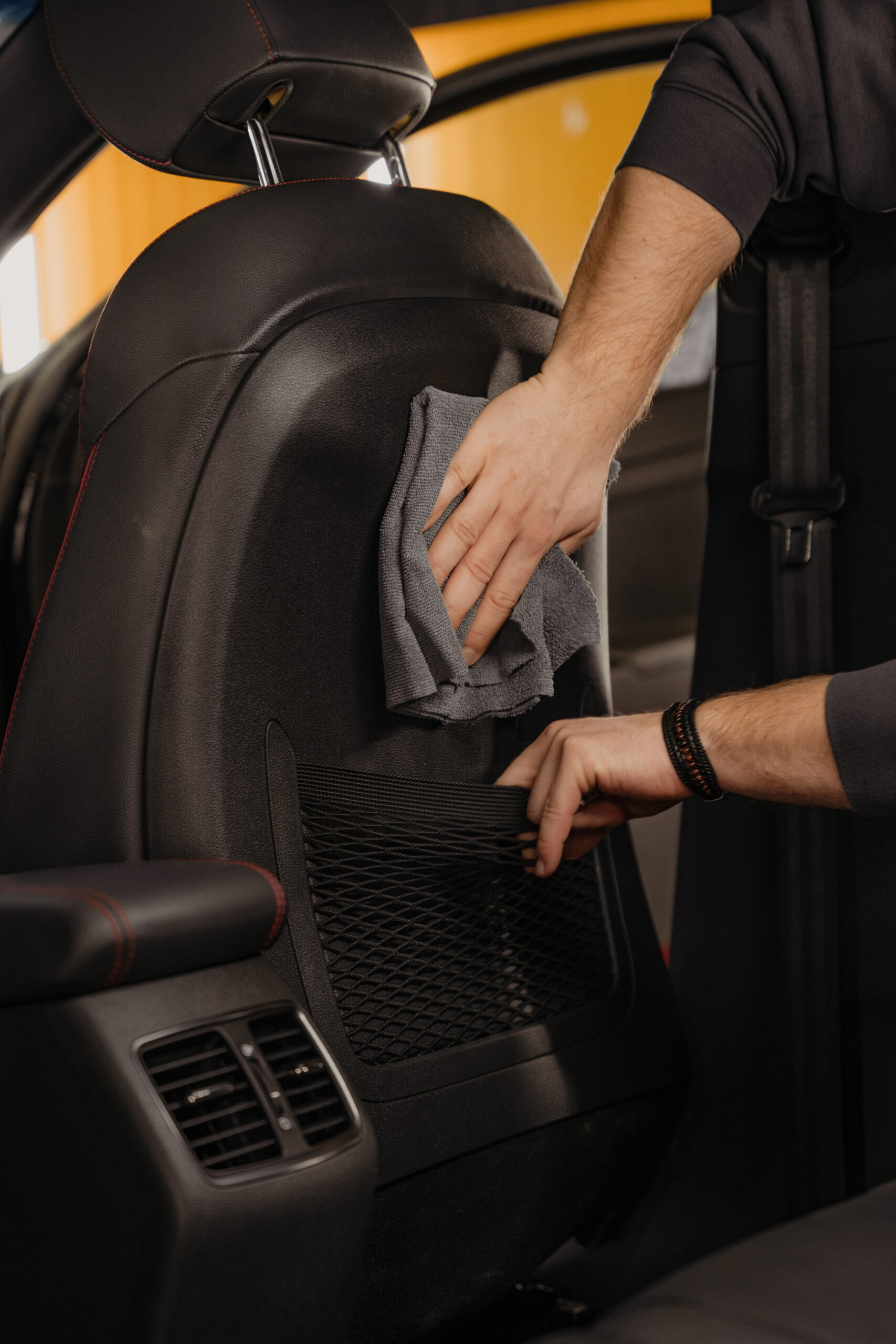
Use a clean, slightly damp microfiber towel to remove loosened dirt and remaining cleaner. Then use a dry microfiber to blot excess moisture instead of only wiping across the surface.
-
06
Clean the entire panel from seam to seam
If you clean only one tiny spot, you can create a visible tide line after drying. For stains on seats, work the complete fabric panel from seam to seam so moisture and cleaning action are distributed more evenly.
-
07
Use APC only for heavier dirt
For muddy mats, lower carpets or more neglected areas, use Good Stuff APC. Always test first and avoid using strong cleaning action on delicate fabrics.
-
08
Let it dry properly
Leave the doors open for a while after cleaning. Good airflow helps prevent damp smell and allows the fabric to dry evenly.
Vacuum first. Use less product than you think. Brush gently. Blot with microfiber. Let the fabric dry before closing the car.
How to Deal With Common Fabric Car Seat Stains
When Do You Actually Need a Wet Vac or Extractor?
Manual low-moisture cleaning is ideal for maintenance and many everyday stains, but an extractor becomes useful when contamination has soaked deep into the seat padding, a large liquid spill has penetrated the foam, or an old stain keeps wicking back after controlled surface cleaning.
In those cases, adding more spray cleaner is not the solution. Deep contamination may require repeated treatment, controlled extraction or professional upholstery cleaning.
Simple Tricks That Save Your Interior Fabrics
What Not to Do When Cleaning Fabric Car Seats
Fabric Car Seat Cleaning FAQ
Can you clean fabric car seats without a wet vac?
How do you clean car seats without leaving water stains?
Does Good Stuff Fabric Cleaner need to be rinsed?
Can Fabric Cleaner be used on Alcantara?
Can I clean a car headliner the same way?
When should I use an extractor instead?
Find Good Stuff Near You
Need the products used in this guide? Find an authorized Good Stuff retailer and check availability in your market. Start with Fabric Cleaner for automotive textiles, then pair it with the right microfiber and detailing tools for controlled interior cleaning.
Find a Distributor →