
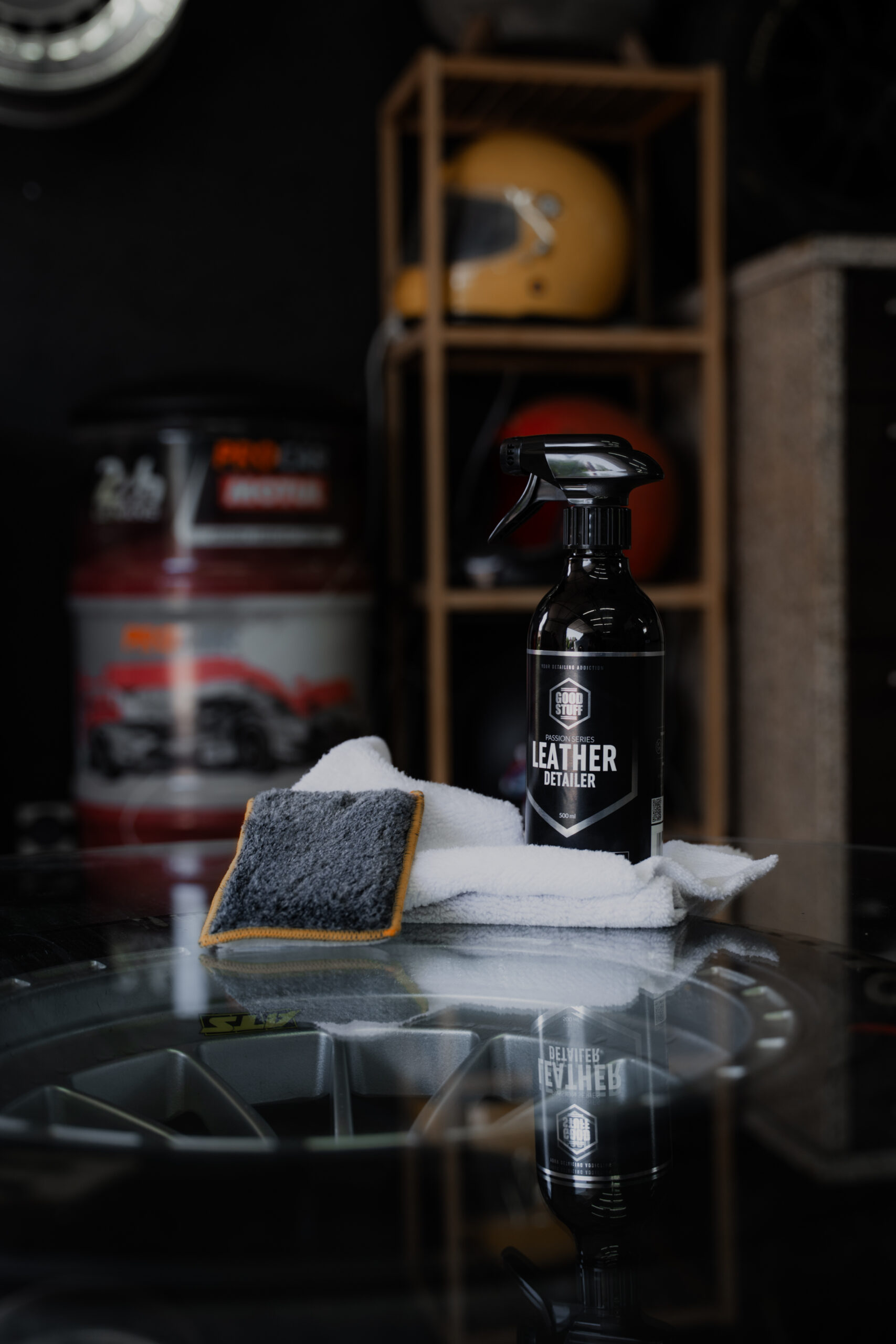
Proper car leather care is not about making seats shiny. Clean, well-maintained automotive leather should look natural, feel comfortable and remain free from the body oils, dirt and residue that gradually build up during everyday driving.
This guide focuses on modern coated automotive leather — the type commonly found on car seats, steering wheels, door panels and interior trim. You will learn when to clean, when to condition and when a quick leather detailer is enough.
How Do You Take Care of Leather Car Seats?
Remove dust, crumbs and loose grit before applying any liquid product.
Use a dedicated leather cleaner when body oils, visible dirt or accumulated grime are present.
Apply a suitable leather conditioner after cleaning when the surface needs dedicated conditioning.
Use a leather detailer for light dust, fingerprints and quick routine maintenance.
Know What Type of Leather You Are Cleaning
The Good Stuff leather-care system described in this guide is intended for modern coated automotive leather.
Before treating the complete seat or steering wheel, always test the product on a small hidden area and check the surface for colour stability and compatibility.
- Nubuck
- Suede
- Oiled leather
- Damaged surfaces where the coating is already failing
Why Regular Car Leather Care Is Important
Seats and steering wheels are constantly exposed to skin oils, sweat, dust, clothing transfer and everyday touch marks. Over time, this contamination can make coated leather look darker, shinier and uneven.
Body Oils
Frequently touched surfaces gradually collect oils that can create a dark or glossy appearance.
Dirt & Dust
Loose particles and everyday grime settle into grain, seams and textured areas.
Daily Wear
Repeated contact, clothing and movement make seats and steering wheels high-maintenance areas.
Dryness
Conditioning helps maintain softness and flexibility when coated leather begins to feel dry or stiff.
A glossy seat is not automatically damaged leather. Often the shine comes from accumulated contamination — although permanent wear, coating damage or colour loss cannot be corrected by cleaning alone.
Vacuum the Leather Before Wet Cleaning
Start by removing loose dust, crumbs and grit from the seat, seams and surrounding areas. This reduces the chance of dragging particles across the surface once cleaning begins.
- Vacuum seat bases and backrests.
- Pay attention to stitching, seams and perforations.
- Use a soft detailing brush in tight areas.
- Avoid scratching the surface with a hard vacuum nozzle.
Proper preparation makes the wet-cleaning stage easier and prevents loose contamination from becoming mixed into the cleaner.
Clean Leather Seats Without Over-Wetting Them
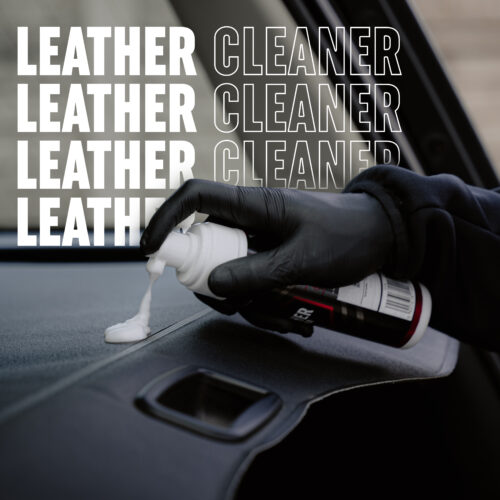
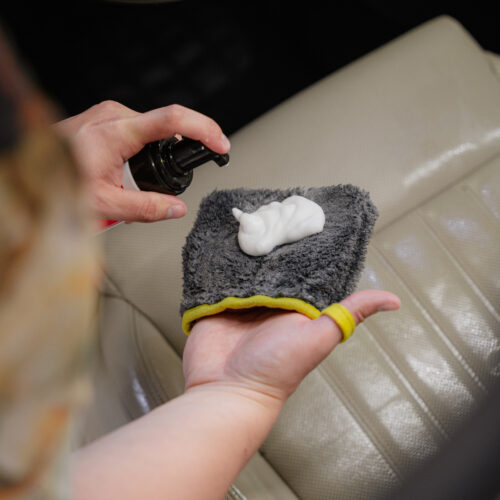
When the leather has accumulated dirt, body oils or visible grime, use a dedicated product such as Good Stuff Leather Cleaner.
Its stable foam gives you better control than a freely running liquid and helps limit unnecessary moisture on the surface.
- Apply the foam to your tool. Use a soft leather brush, microfiber applicator or clean microfiber towel.
- Work gently. Agitate the surface using controlled movements without excessive pressure.
- Work section by section. Avoid allowing loosened contamination to dry back onto the surface.
- Wipe clean. Remove cleaner and loosened dirt with a clean microfiber towel.
- Allow the leather to dry. The surface should be clean and dry before conditioning.
Use the Right Tool for the Area
A leather brush helps work cleaner into grain, seams and textured areas, while microfiber gives good control when wiping away loosened contamination.
Condition Clean Leather With Leather Milk
Cleaning and conditioning perform different jobs. Leather Cleaner removes accumulated contamination; it does not replace the conditioning stage.
After the coated leather is properly cleaned and completely dry, apply Good Stuff Leather Milk when dedicated conditioning is required.
Leather Milk helps maintain softness and flexibility while preserving a clean, natural, factory-style matte appearance without greasy or sticky residue.
- Apply a small amount to a clean applicator.
- Spread a thin, even layer.
- Avoid unnecessarily heavy application.
- Allow approximately 40–60 minutes to absorb and dry.
- Apply a second thin layer only if the leather requires it.
When Should You Use Leather Detailer?
Not every maintenance session requires a complete deep clean and conditioning process.
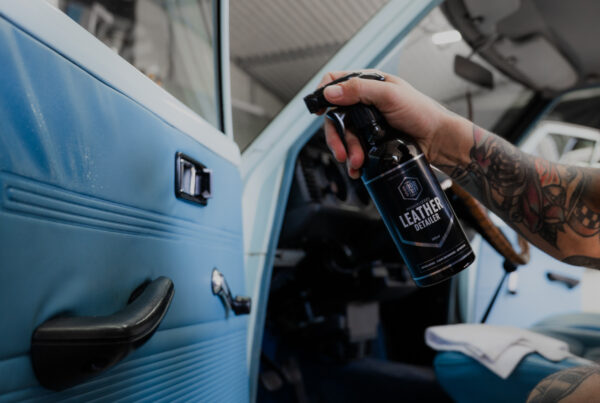
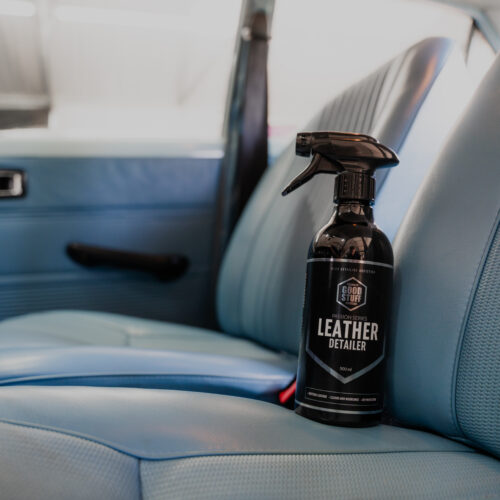
Good Stuff Leather Detailer is designed for quick maintenance when the leather only has light daily contamination such as dust, fingerprints, fresh marks or minor colour transfer.
It cleans and refreshes in one step, dries to a natural matte finish and leaves no greasy film. It also provides light UV support and a water-repellent effect.
Leather Cleaner vs Leather Milk vs Leather Detailer
| Product | Main Job | Use It When | Finish |
|---|---|---|---|
| Leather Cleaner | Deeper cleaning | Dirt, body oils and visible buildup have accumulated | Clean surface ready for further care |
| Leather Milk | Conditioning | Clean leather needs dedicated conditioning | Natural, dry matte appearance |
| Leather Detailer | Quick maintenance | Light dust, fingerprints and everyday marks | Fast matte refresh |
Want Everything for a Full Leather-Care Routine?
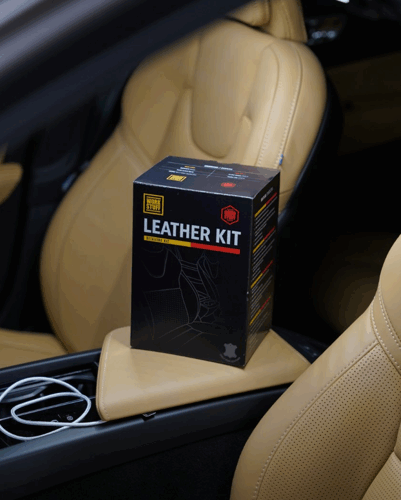
The Good Stuff Leather Kit combines the two-stage cleaning and conditioning process with the tools needed to complete it correctly.
Leather Cleaner + Leather Milk
Brush + microfiber + applicator
One complete clean-to-condition system
How to Keep Leather Car Seats in Good Condition
Remove Spills Quickly
Fresh contamination is easier to control than marks that have been allowed to remain on the surface.
Do Not Over-Saturate
Use controlled amounts of product, particularly around perforations, seams and stitching.
Use Dedicated Products
Avoid experimenting with aggressive household cleaners on automotive leather.
Keep Tools Clean
Dirty brushes, towels and applicators can transfer contamination back onto the leather.
Watch High-Touch Areas
Steering wheels, bolsters and armrests often require attention before the rest of the interior.
Do Not Chase Shine
Modern coated automotive leather should generally have a natural rather than greasy appearance.
Car Leather Care FAQ
How often should I clean leather car seats?
There is no universal schedule because use, contamination and interior conditions vary. Clean the leather when visible dirt, body oils or unwanted shine begin to build up. Frequently touched areas such as steering wheels and seat bolsters may need attention sooner.
How often should I condition leather car seats?
Condition after deeper cleaning when the coated leather requires dedicated conditioning. Avoid applying heavy layers simply according to a calendar; inspect the surface and follow the instructions of the conditioner being used.
Can Leather Detailer replace Leather Milk?
No. Leather Detailer is designed for quick maintenance, light cleaning and refreshing between deeper treatments. Leather Milk provides a dedicated conditioning step after the leather has been thoroughly cleaned.
Should leather car seats be shiny?
A strong greasy shine is not normally the goal on modern coated automotive leather. Accumulated body oils and dirt can make frequently touched surfaces appear darker or glossier. Proper cleaning often restores a more natural-looking matte finish.
Can I use an all-purpose cleaner on leather car seats?
Use only a product whose manufacturer specifically confirms compatibility with the type of leather you are treating. For routine car leather care, a dedicated leather cleaner provides better control and clearer surface compatibility. Always test a hidden area first.
Can I use Leather Cleaner or Leather Milk on suede or nubuck?
No. Good Stuff Leather Cleaner and Leather Milk are intended for modern coated automotive leather. Do not use them on nubuck, suede or oiled leather.
Can leather conditioner repair cracked car seats?
No. Conditioning can help maintain suitable leather, but it cannot repair existing cracks, worn coatings, torn material or colour loss. Those issues require a repair or restoration process.
How often can I use Leather Detailer?
Leather Detailer is designed for regular maintenance between deeper cleaning sessions. Current Good Stuff guidance recommends reapplication approximately every 2–4 weeks when needed.
Good Leather Care Starts With the Right Process
Keeping automotive leather in good condition does not require constant heavy cleaning. The key is matching the process to the condition of the surface.
Vacuum first, use Leather Cleaner when contamination has built up, condition clean leather with Leather Milk when required and use Leather Detailer for quick maintenance between deeper sessions.
The result should be clean, controlled and natural-looking leather — not a greasy or artificially glossy finish.


