
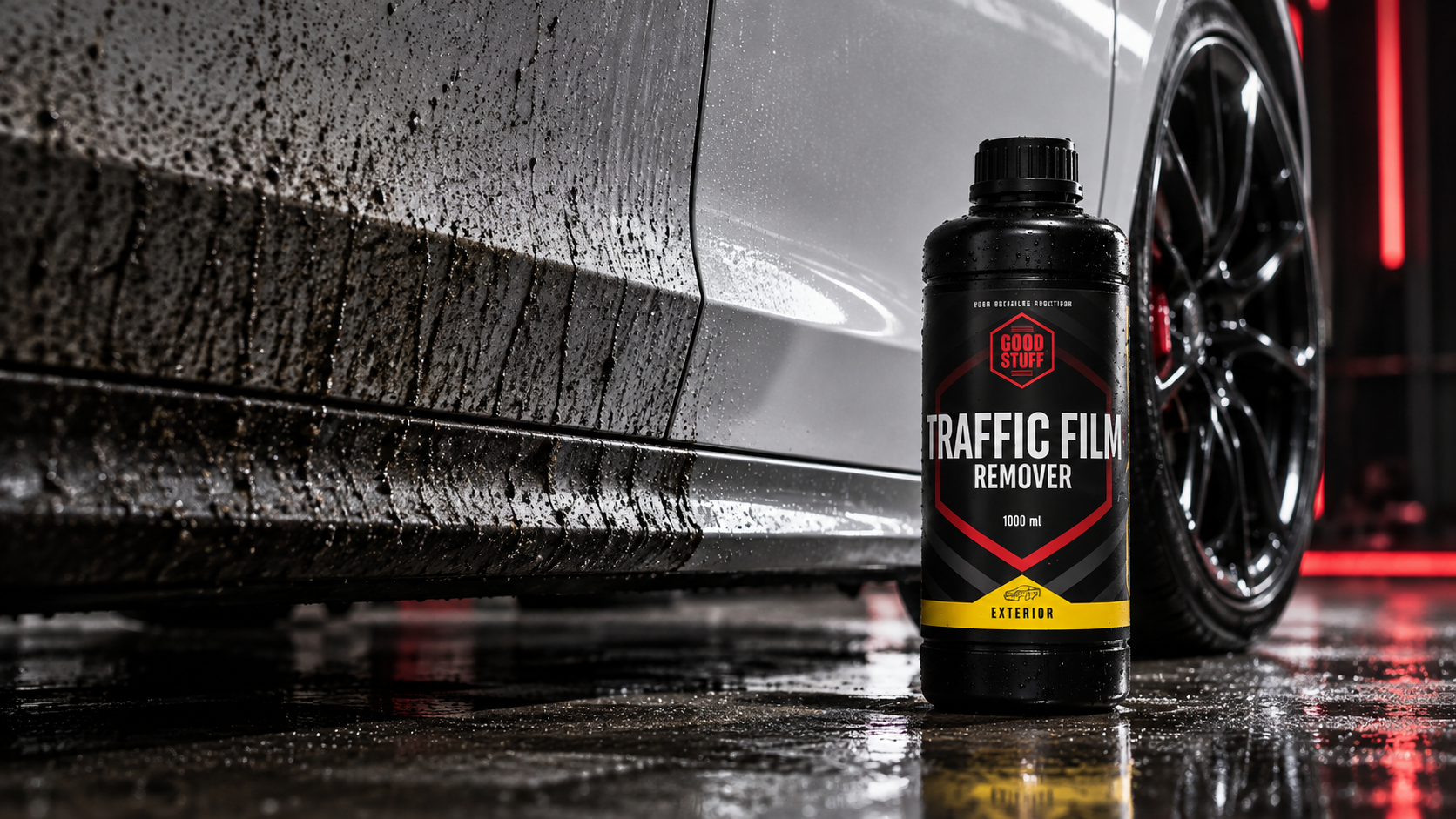
What Traffic Film Remover Actually Does and When You Really Need It
If the lower half of your car still looks grey, greasy or dirty after a rinse, you may be dealing with traffic film rather than loose surface dirt.
Traffic Film Remover, usually shortened to TFR, belongs to the pre-wash stage. Its purpose is not to replace shampoo or make every wash more aggressive. Its purpose is to remove stubborn road contamination before your wash mitt starts moving across the paint.
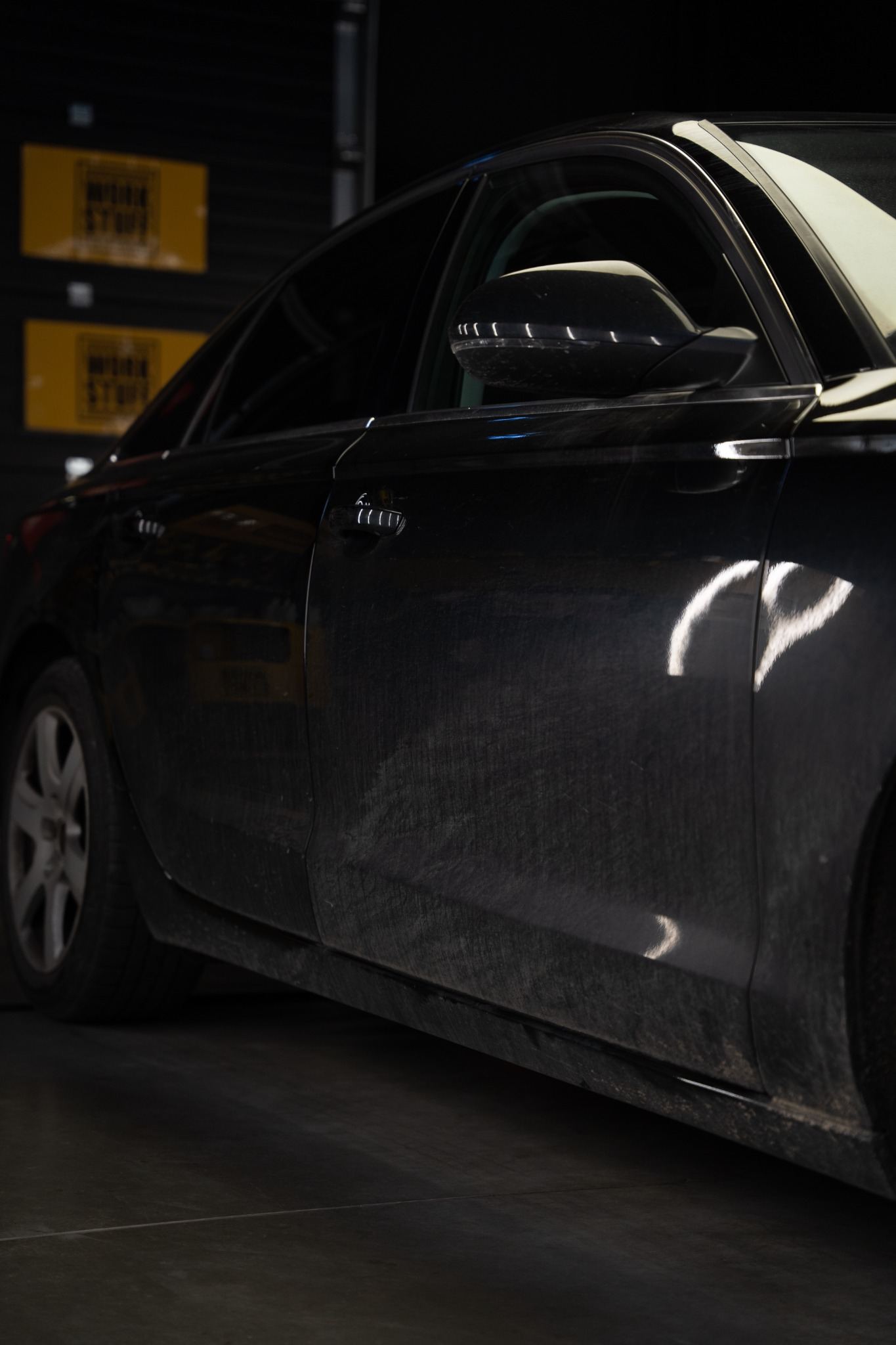
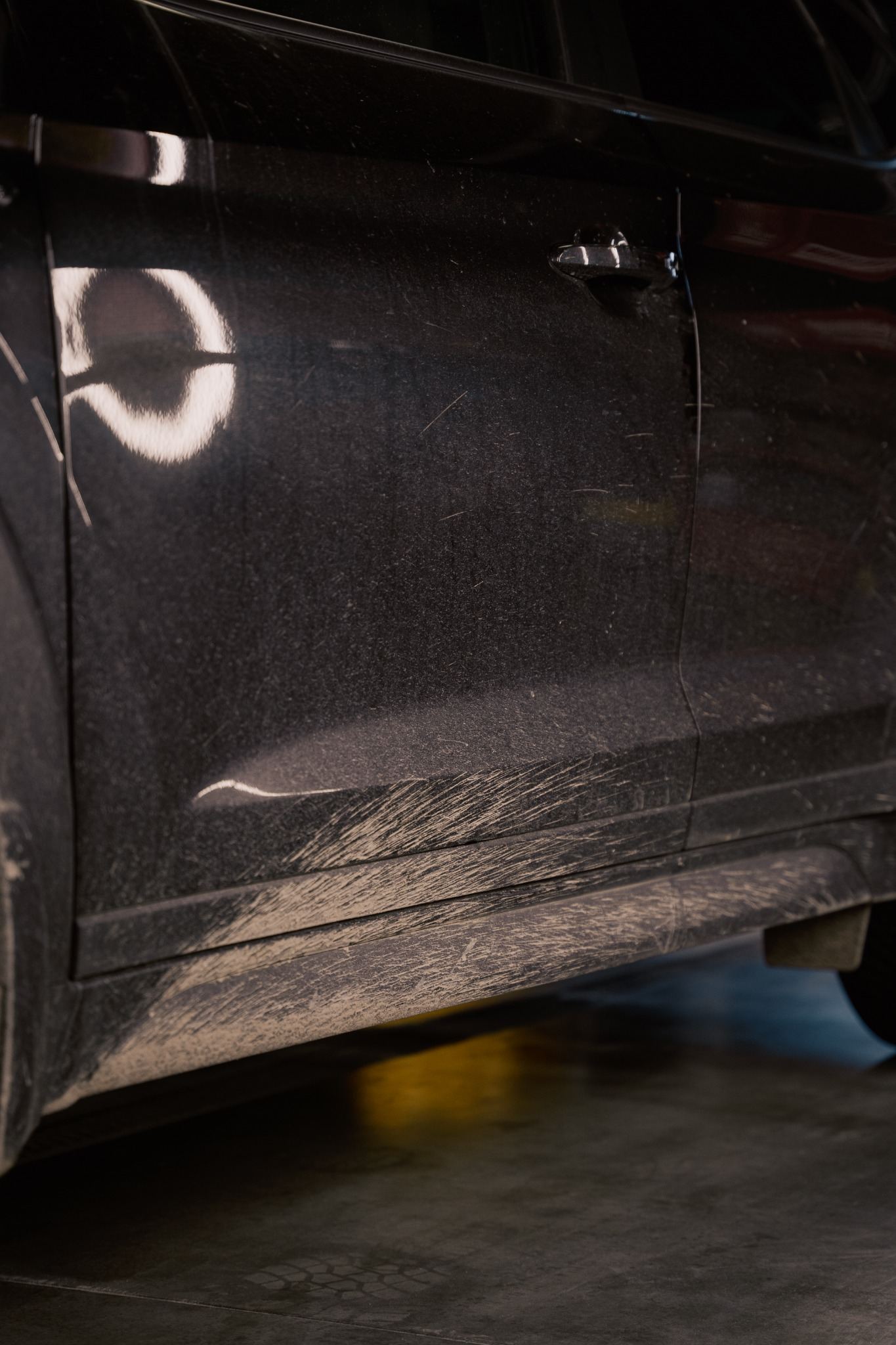
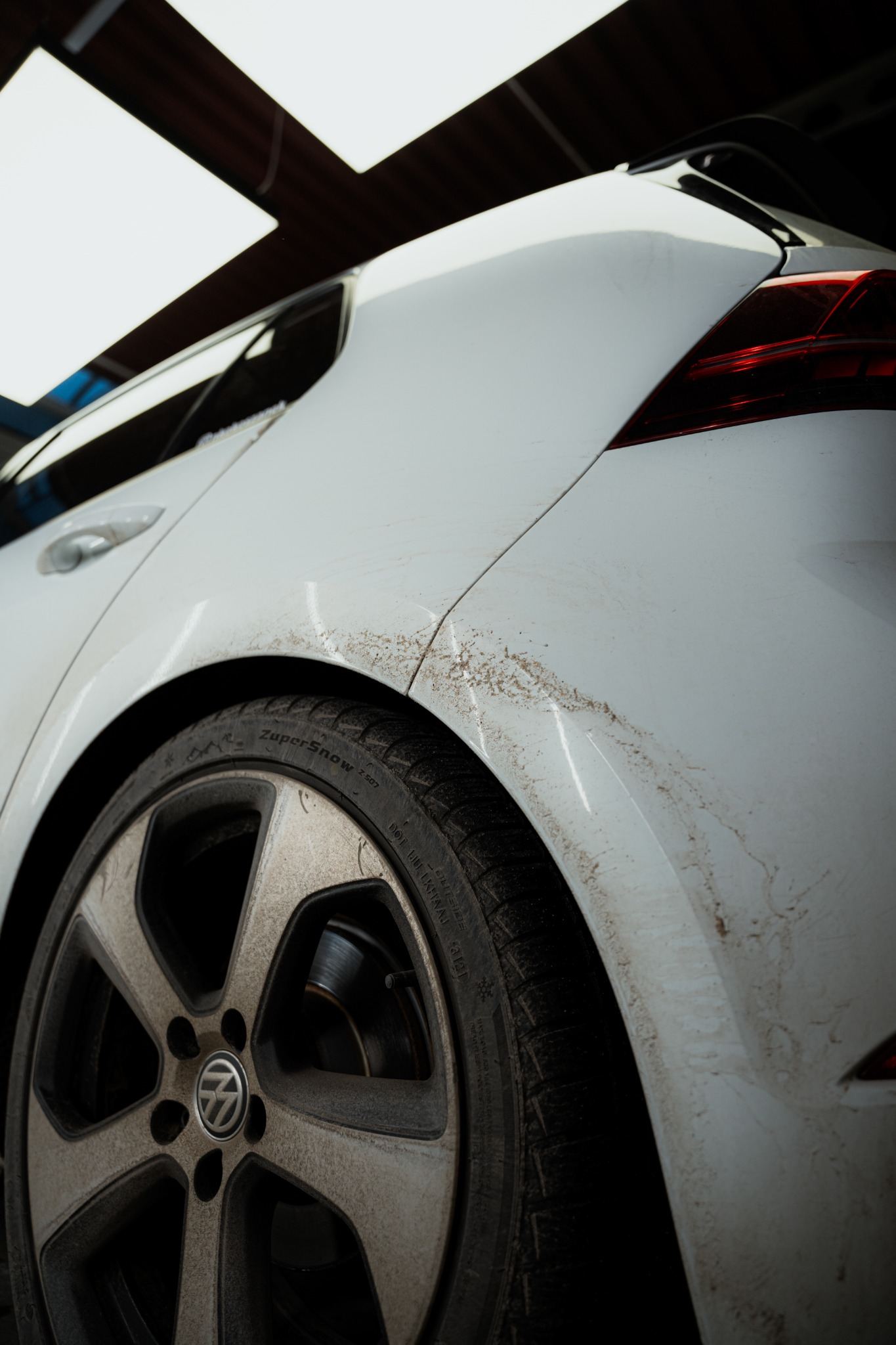
It is not just ordinary dirt.
After driving in rain, winter conditions or heavy traffic, the lower half of the vehicle can develop a dull layer that does not disappear with a simple rinse.
Traffic film can contain oily road residue, fine dirt, salt, tyre contamination and particles carried by water spray. Because these contaminants cling to the surface, water pressure alone may remove the loose dirt while leaving part of the film behind.
This is why contamination is often most noticeable around the lower doors, side skirts, rear bumper, wheel arches and areas directly exposed to road spray.
The more contamination you remove chemically and with pressure water, the less heavy dirt remains between your wash media and the clear coat.
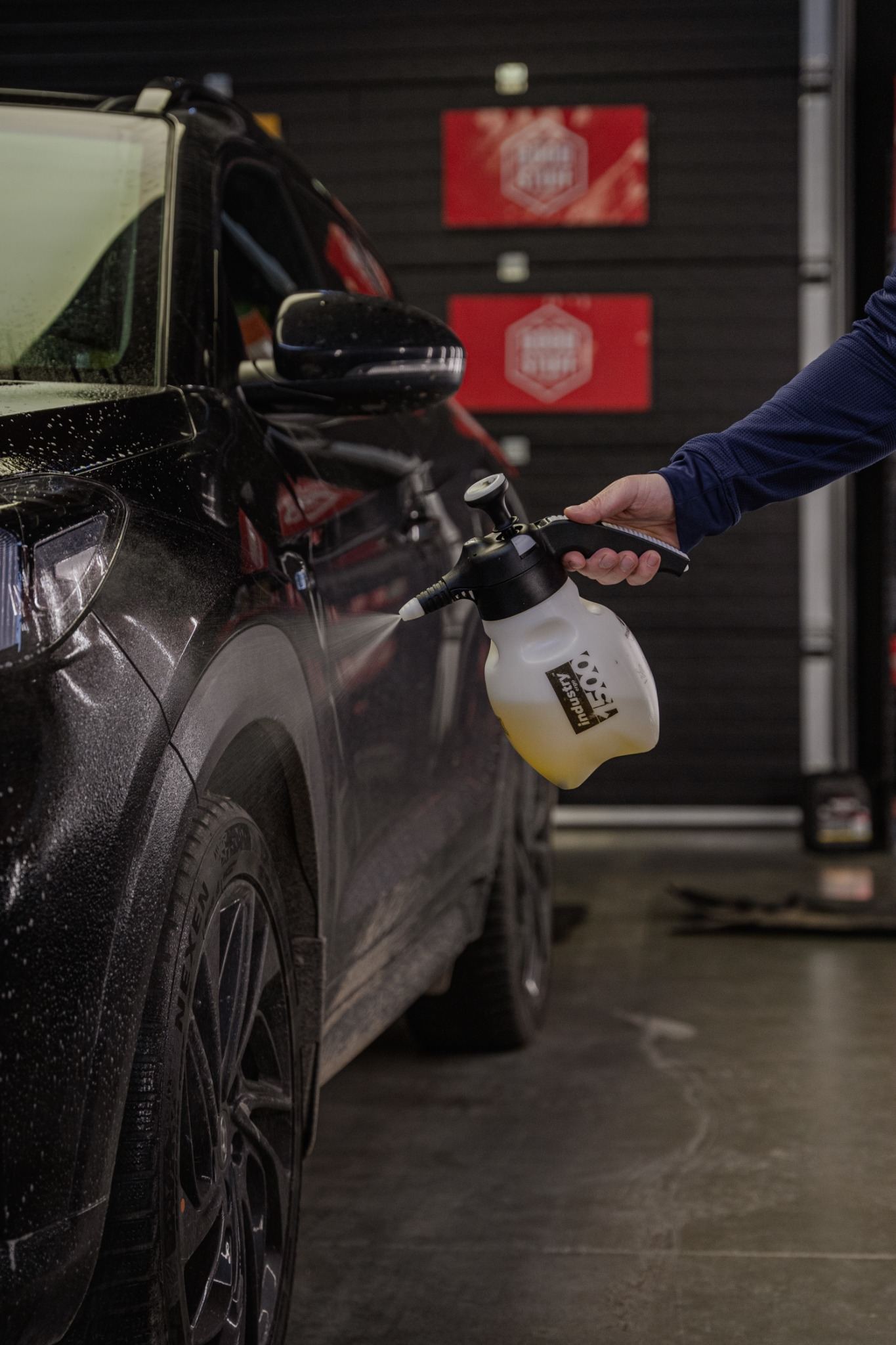
Best visual here: a real pre-wash sequence showing the lower bodywork, product application and pressure rinsing.
Let the contamination decide how aggressive the wash needs to be.
A lightly dusty car and a daily driver covered in motorway grime should not automatically receive the same chemical process.
Inspect before you spray
Look at the lower panels, rear bumper, arches and areas exposed to road spray. Decide whether you are dealing with loose dirt or stubborn traffic film.
Use only the strength you need
Concentrated cleaners should be diluted according to the manufacturer's instructions and the level of contamination. Stronger is not automatically better.
Work on cool surfaces
Avoid hot panels and direct sunlight. The product needs working time without drying prematurely.
Give the chemistry time to work
Cleaning agents and surfactants help separate greasy contamination from the surface so it can be removed during rinsing.
Pressure rinse thoroughly
This is where the loosened contamination should leave the surface before contact washing begins.
Then contact wash
TFR is not shampoo. After rinsing, continue with a lubricated contact wash using the appropriate shampoo and wash media.
Different tools for different contamination.
TFR and Snow Foam both sit before the contact wash, but they are not identical products and they do not need to be used in every wash.
Snow Foam
A pH-neutral snow foam is well suited to routine maintenance washing, everyday road dirt and reducing loose contamination before contact.
Explore Snow FoamTraffic Film Remover
TFR becomes more useful when the vehicle carries oily road film, dirty lower panels, winter residue or heavier exterior contamination.
Explore Traffic Film RemoverYes, when the vehicle is heavily contaminated and the wash requires it. But stacking chemicals without a reason does not automatically improve the result.
TFR works better when you stop treating it like a shortcut.
Automatically using the strongest dilution
Match the chemical strength to the contamination instead of treating every wash as a deep clean.
Judging cleaning ability by foam thickness
Thick foam looks impressive, but visible foam and actual cleaning power are not the same thing.
Letting the product dry
Cleaning products should remain wet during their intended working time and be rinsed properly afterwards.
Using TFR when mild pre-wash is enough
Regular maintenance contamination often does not require stronger chemistry.
Expecting it to replace shampoo
A pre-wash reduces contamination. It does not replace the lubricated contact-wash stage.
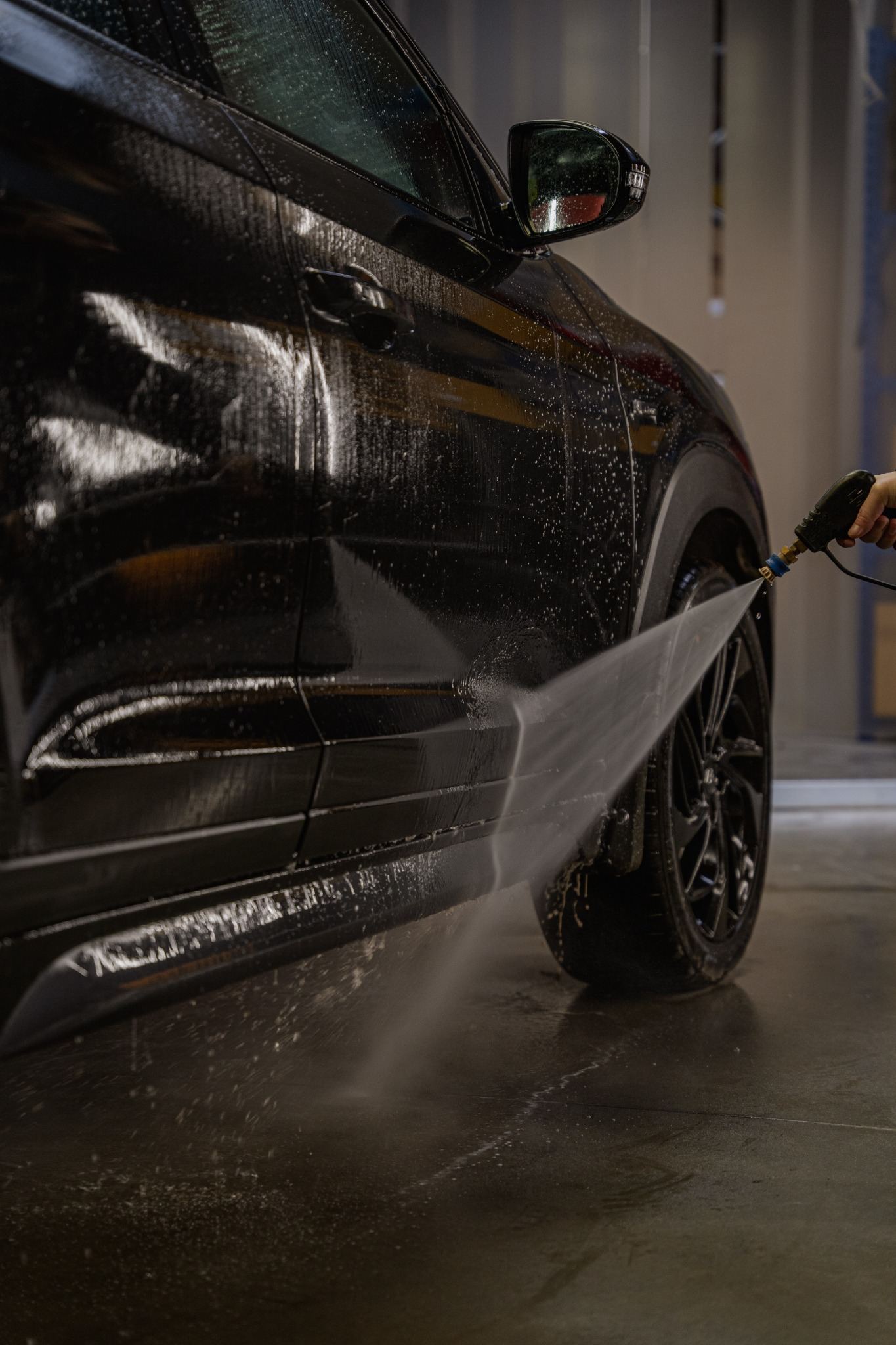
Pre-wash is only the beginning.
Once the heavy road contamination is removed, move into the normal wash process instead of repeating aggressive cleaning stages unnecessarily.
Traffic Film Remover FAQ
What is traffic film on a car?
Traffic film is a stubborn mixture of road grime, oily residue, salt and fine particles that accumulates on exterior surfaces while driving.
How do you use Traffic Film Remover?
Apply the product according to its dilution instructions, allow it to work without drying and rinse thoroughly before contact washing.
Do you need TFR for every wash?
No. Use it when the level and type of road contamination require stronger pre-cleaning. Maintenance dirt may only need a milder pre-wash.
Is TFR the same as Snow Foam?
No. Snow Foam is primarily designed for regular maintenance pre-washing, while TFR is better suited to heavier road film and oily contamination.
Does TFR replace car shampoo?
No. Traffic Film Remover is used before contact washing. Shampoo provides lubrication and cleaning during the contact stage.
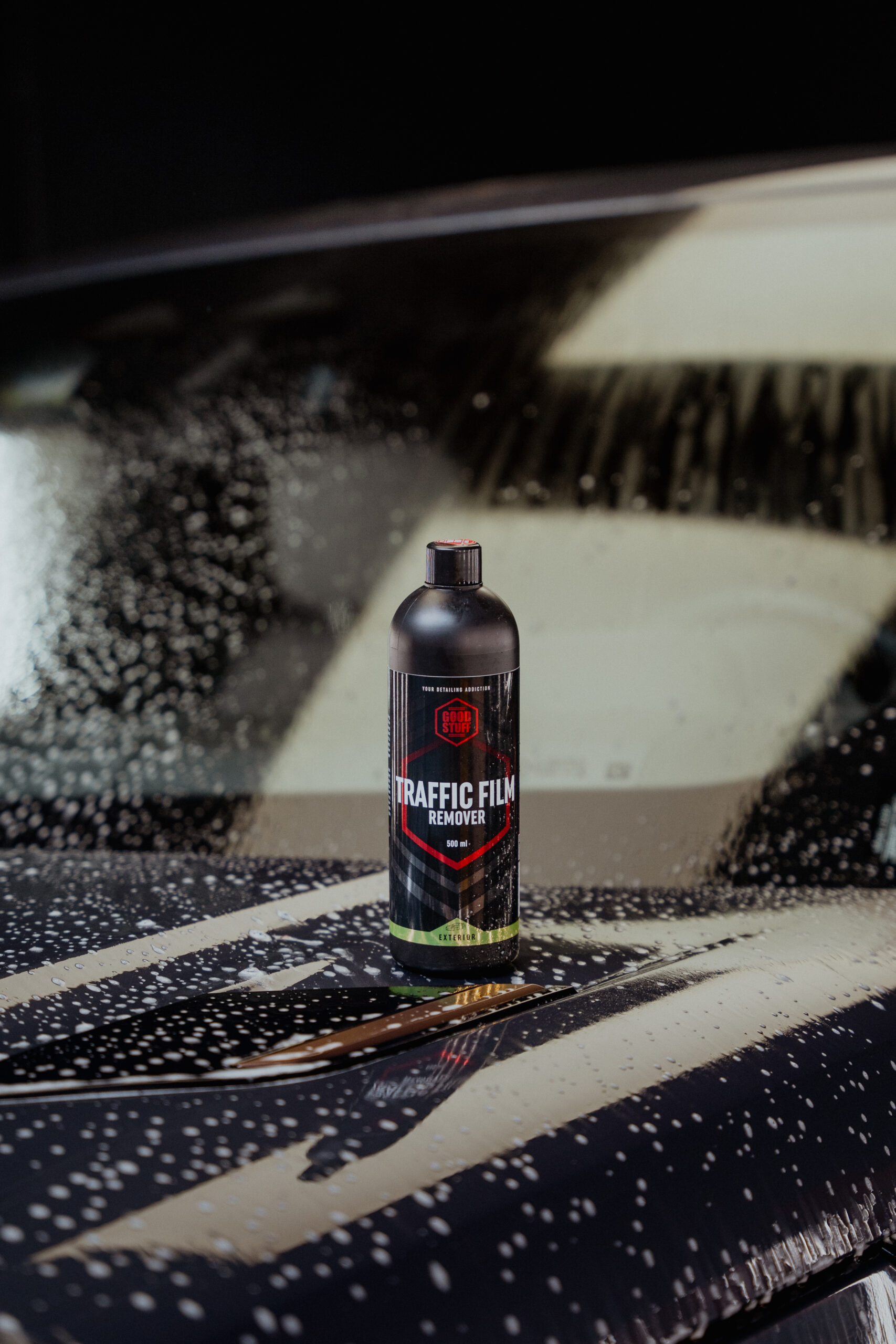
Good Stuff Traffic Film Remover
Concentrated pre-wash for oily traffic film, contaminated lower panels and more demanding exterior cleaning.
VIEW TRAFFIC FILM REMOVER


