

HOW TO CLEAN CAR SEATS PROPERLY
The best way to clean car seats depends on the material. Fabric, leather and synthetic upholstery need different products and techniques.
Remove loose dirt first, use controlled moisture and always allow the seat to dry completely.

FIRST, IDENTIFY THE MATERIAL
The surface determines both the cleaner and the technique.
FABRIC / CLOTH
Holds dirt and moisture inside the fibers. Use controlled moisture and avoid soaking the foam underneath.
LEATHER
Use dedicated leather chemistry and gentle agitation. Avoid aggressive cleaners and excessive moisture.
SYNTHETIC LEATHER
Usually easier to maintain, but test the cleaner on a hidden area first.
HOW TO CLEAN CLOTH CAR SEATS
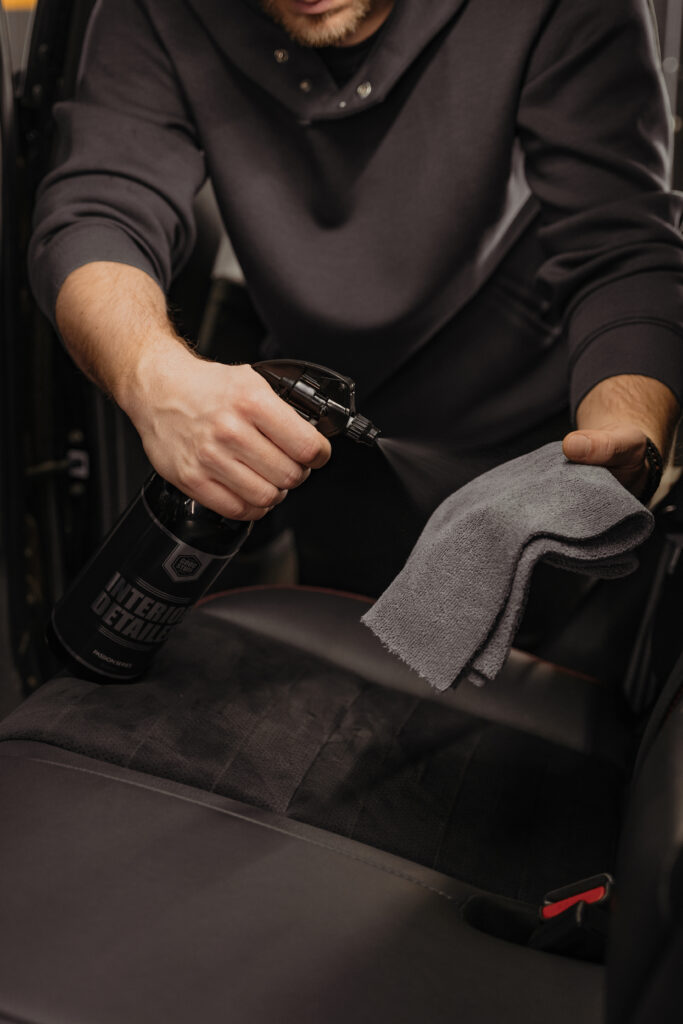
Clean the fabric without soaking it.
Excess liquid can reach the foam underneath, increase drying time and contribute to water marks or odor.
VACUUM FIRST
Remove crumbs, dust, sand and pet hair.
APPLY CLEANER LIGHTLY
Use a dedicated fabric cleaner without saturating the upholstery.
AGITATE GENTLY
Work in small sections with a suitable interior tool.
BLOT & WIPE
Collect loosened dirt and excess moisture with clean microfiber.
CLEAN EVENLY
Avoid over-wetting only the center of a visible stain.
DRY COMPLETELY
Give the upholstery sufficient airflow before closing the car.
CLEAN THE AREA EVENLY
Cleaning only the center of a stain can leave a visible ring once the material dries.
Use controlled moisture and collect excess liquid with microfiber.
REMOVE STAINS WITHOUT MAKING THEM WORSE
Start gently and increase cleaning intensity only when necessary.
BLOT FIRST
Absorb as much liquid as possible before adding cleaner.
WORK SLOWLY
Give the cleaner time to loosen contamination.
REPEAT, DON'T SCRUB
Two gentle passes are safer than one aggressive cycle.
EVEN THE AREA
Work beyond the visible edge so the material dries uniformly.
REMOVE THE SOURCE
Fragrance does not remove contamination trapped inside the seat.
TEST FIRST
Start with the mildest appropriate method.
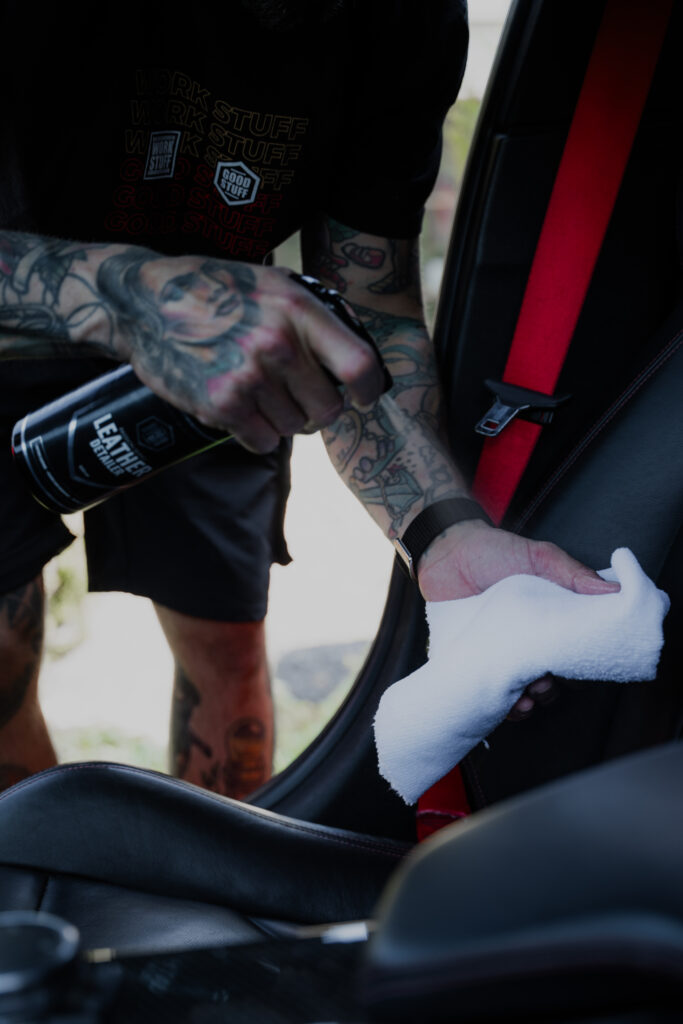
CLEAN LEATHER GENTLY
Leather should not be cleaned like textile upholstery.
Remove loose dirt, use a dedicated leather cleaner, agitate gently and remove residue before applying leather care where required.

WHAT SHOULD YOU USE TO CLEAN CAR SEATS?
Match the chemistry to the material instead of trying to make one cleaner work everywhere.
CLEANER IS ONLY PART OF THE JOB
The result depends on how much product you use, the tool you choose and how thoroughly you remove loosened contamination.
More chemistry is not automatically better.

WHAT NOT TO DO WHEN CLEANING SEATS
More cleaner does not mean better cleaning.
Aggressive agitation can damage fibers.
Fabric and leather have different requirements.
Dissolved contamination should be removed.
Poor airflow increases the risk of damp odor.
Test unusual or older materials first.
LET CAR SEATS DRY FULLY
Drying time depends on moisture, temperature, humidity and airflow.
The surface can feel dry while deeper upholstery still contains moisture.
CAR SEAT CLEANING IN 6 STEPS
MORE ABOUT INTERIOR CARE
CAR SEAT CLEANING QUESTIONS
What is the best way to clean car seats?
Identify the material, vacuum loose dirt, use the correct cleaner, remove residue and let the seat dry fully.
How do you clean fabric car seats?
Vacuum, apply fabric cleaner lightly, agitate gently, blot with microfiber and dry completely.
How do I avoid water marks?
Avoid soaking one small spot. Clean evenly and remove excess moisture.
Can APC be used on fabric seats?
A dedicated upholstery cleaner is the preferred option for routine textile cleaning.
How should leather seats be cleaned?
Use dedicated leather cleaner, gentle agitation and clean microfiber.
How long do car seats take to dry?
It depends on moisture, temperature and ventilation. Deeper cleaning can require several hours.
THE RIGHT CLEANER. THE RIGHT SURFACE.
Explore GOOD STUFF interior care for fabric, leather and everyday cabin maintenance.


